
Research article
Wolverine vs GLOW Peptide Blends
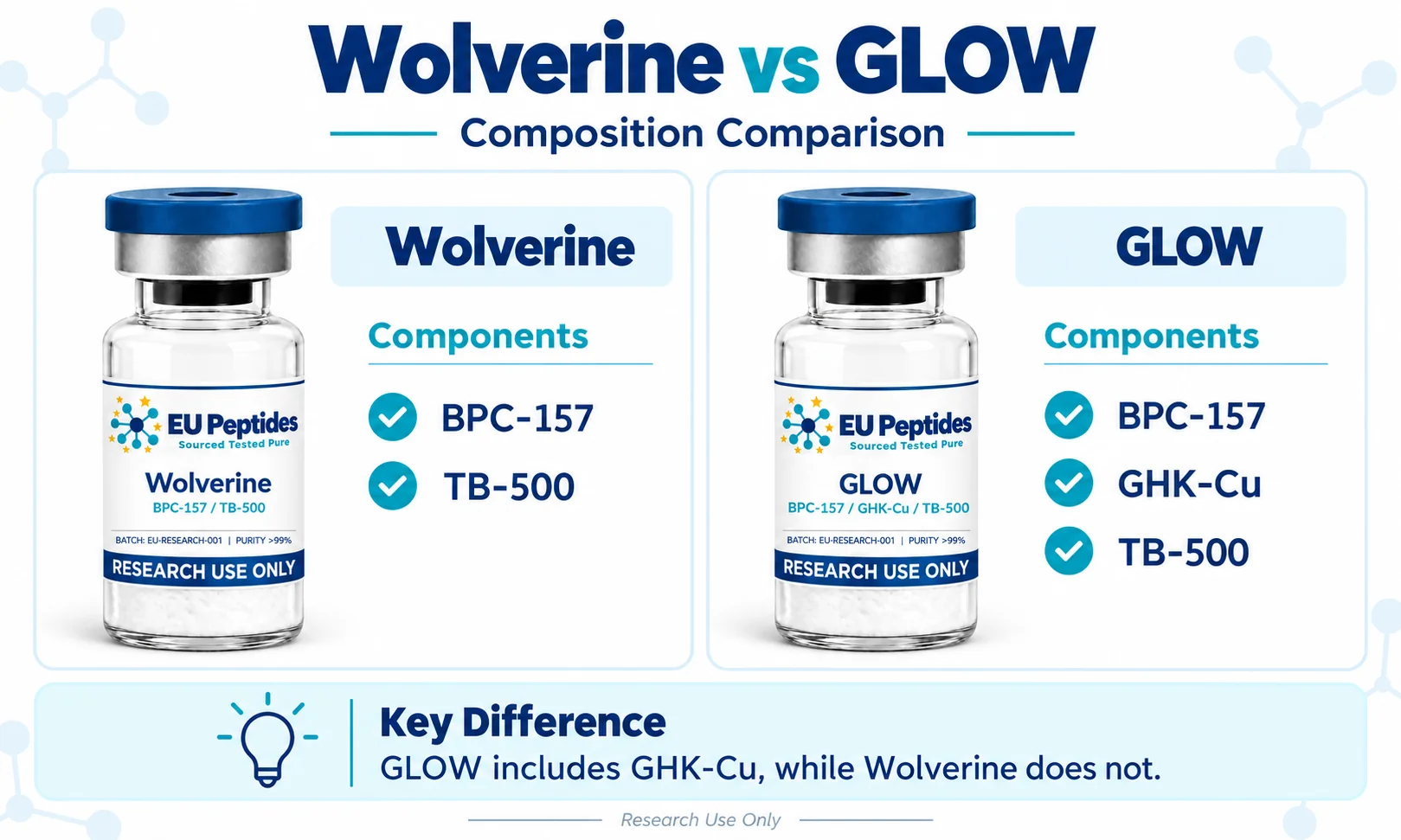
Wolverine and GLOW are two common peptide blends built around different core compounds. Wolverine centers on BPC-157 and TB-500 for injury recovery; GLOW centers on GHK-Cu for skin and aesthetic remodeling. This comparison examines how the two stacks differ in composition, primary focus, and intended research use.
Side-by-side comparison
| Stack | Core compounds | Primary focus |
|---|---|---|
| Wolverine | BPC-157 + TB-500 | Tendon, ligament, and injury recovery |
| GLOW | GHK-Cu (+ others) | Skin quality, collagen, aesthetic remodeling |
Wolverine stack
The Wolverine blend combines BPC-157 and TB-500 into a single research protocol aimed at musculoskeletal recovery. BPC-157 is a synthetic pentadecapeptide modeled on a protective protein originally isolated from gastric juice. In preclinical work it is examined for effects on tendon, ligament, and gut-lining integrity, with particular attention to cell migration, collagen deposition, and modulation of local inflammatory signals. TB-500 is a synthetic fragment corresponding to an active region of thymosin beta-4. Its primary studied action involves actin, the structural protein that enables cells to change shape and move. By influencing actin availability, TB-500 is investigated for its capacity to support cell migration into damaged areas, blood-vessel formation, and broader structural reorganization of tissue.
When the two compounds are used together, the research rationale is complementary rather than identical. BPC-157 is often discussed in the context of more localized connective-tissue and gut repair, while TB-500 is discussed in the context of systemic cell motility and tissue remodeling. Investigators interested in recovery from physical trauma, joint stress, or stubborn soft-tissue injury frequently examine this combination because the two mechanisms address different aspects of the healing process; one more oriented toward protective signaling and local matrix repair, the other toward cellular mobility and vascular support. The stack is therefore associated with functional restoration of damaged musculoskeletal structures rather than with surface-level or cosmetic endpoints.
GLOW stack
The GLOW blend is organized around GHK-Cu, a copper-binding tripeptide that has been studied for its effects on gene expression related to extracellular-matrix remodeling, collagen synthesis, and tissue repair. GHK-Cu is examined in models of wound healing and skin quality, where it is associated with increased collagen production, improved elasticity markers, and modulation of inflammatory gene sets. Additional peptides are sometimes included in commercial GLOW formulations, but GHK-Cu supplies the characteristic aesthetic and regenerative signal that defines the stack. Research interest centers on dermal remodeling, reduced appearance of tissue damage, and systemic support for structural proteins in skin rather than on high-load athletic recovery.
Because its primary literature emphasizes copper-dependent pathways and gene-level regulation of matrix proteins, GLOW is typically positioned for questions about skin quality, anti-aging markers, and cosmetic tissue outcomes. The healing properties attributed to the stack are those of improved collagen architecture and modulated inflammation in superficial and dermal layers, not the rapid functional recovery of tendons or ligaments under mechanical load. Users and researchers who select GLOW are generally investigating endpoints related to appearance, elasticity, and long-term structural quality of skin and related tissues.
Key differences
The most practical distinctions are composition and research emphasis. Wolverine relies on BPC-157 and TB-500; GLOW relies on GHK-Cu as its defining component. Wolverine literature and use cases cluster around tendons, ligaments, and recovery from physical injury; GLOW literature and use cases cluster around skin quality, collagen synthesis, and aesthetic remodeling. Mechanistically, BPC-157 and TB-500 are linked to angiogenesis, cell migration, and connective-tissue repair signals, whereas GHK-Cu is linked to copper-dependent modulation of gene expression and dermal matrix remodeling. These are overlapping categories only at the highest level of “tissue repair”; the specific tissues, primary mechanisms, and typical research questions differ.
Overlap can exist when an investigator wants both functional musculoskeletal recovery and improved skin quality, but that remains a separate experimental choice that requires its own controls. The two stacks are not interchangeable substitutes for each other. Selecting one or the other begins with matching the core compounds and their dominant studied effects to the tissue or outcome under investigation.
Source and quality
Identity and purity must be confirmed for the specific material in hand. Catalog codes identify the product type or blend name; they do not identify a production run. Only the lot number does that. A usable certificate of analysis lists the same lot number that appears on the vial and reports the analytical results obtained for that batch. Without lot-level matching, claims about the presence, identity, or purity of BPC-157, TB-500, GHK-Cu, or any accompanying compounds cannot be verified for the container being used. This control applies equally to single-compound vials and to blended formulations.
Choosing between the stacks
Selection follows the research question rather than a general preference for blends. Work focused on tendon, ligament, or musculoskeletal recovery from trauma or mechanical stress typically examines the Wolverine combination of BPC-157 and TB-500. Work focused on skin quality, collagen architecture, wound-healing markers, or aesthetic remodeling typically examines the GLOW combination centered on GHK-Cu. When both sets of endpoints are of interest, some investigators run the stacks sequentially or in parallel, but that design still treats them as distinct interventions with distinct mechanisms. In every case, lot-specific documentation precedes interpretation of any outcome.
For the broader category see the Dermatology hub. Product pages: Wolverine stack, GLOW stack.
Related products
 View details
Related product
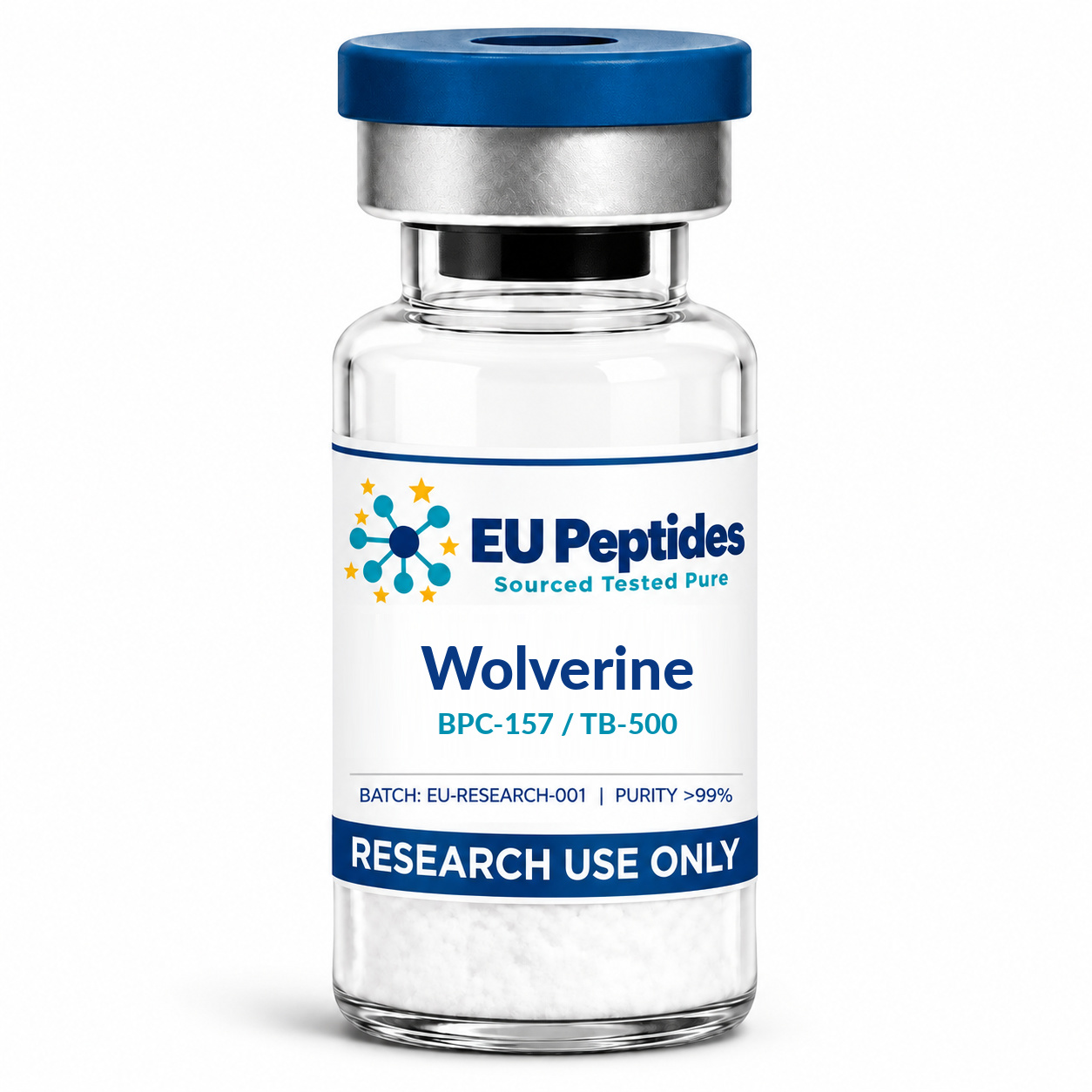
Wolverine BPC-157 TB-500
Research blend of BPC-157 and TB-500 for laboratory studies.
View product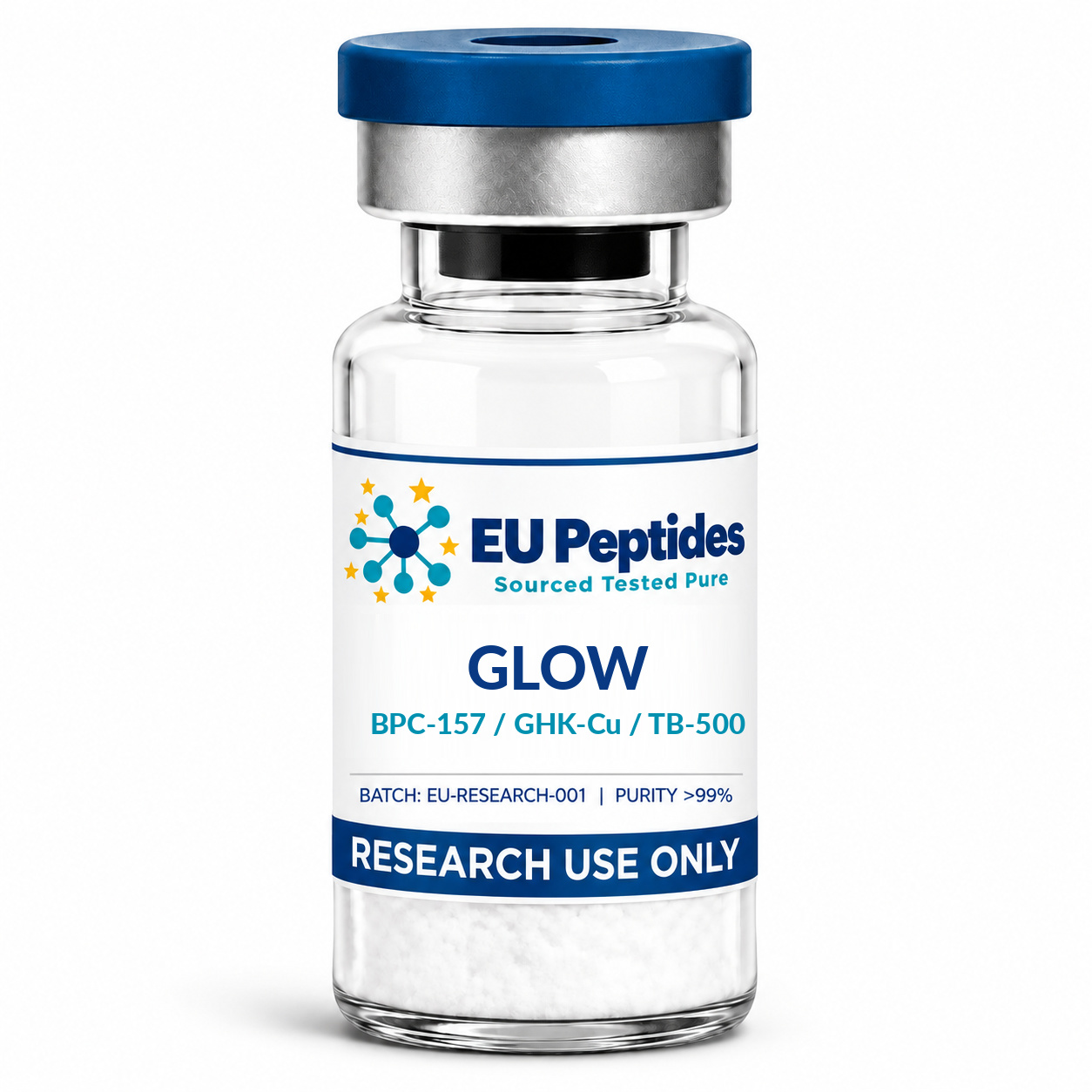 View details
Related product
GLOW BPC-157 GHK-Cu TB-500
Research blend containing BPC-157, GHK-Cu and TB-500 for laboratory studies.
View productAll products are supplied strictly for laboratory and analytical research. They are not for human consumption, medical use, or veterinary use.