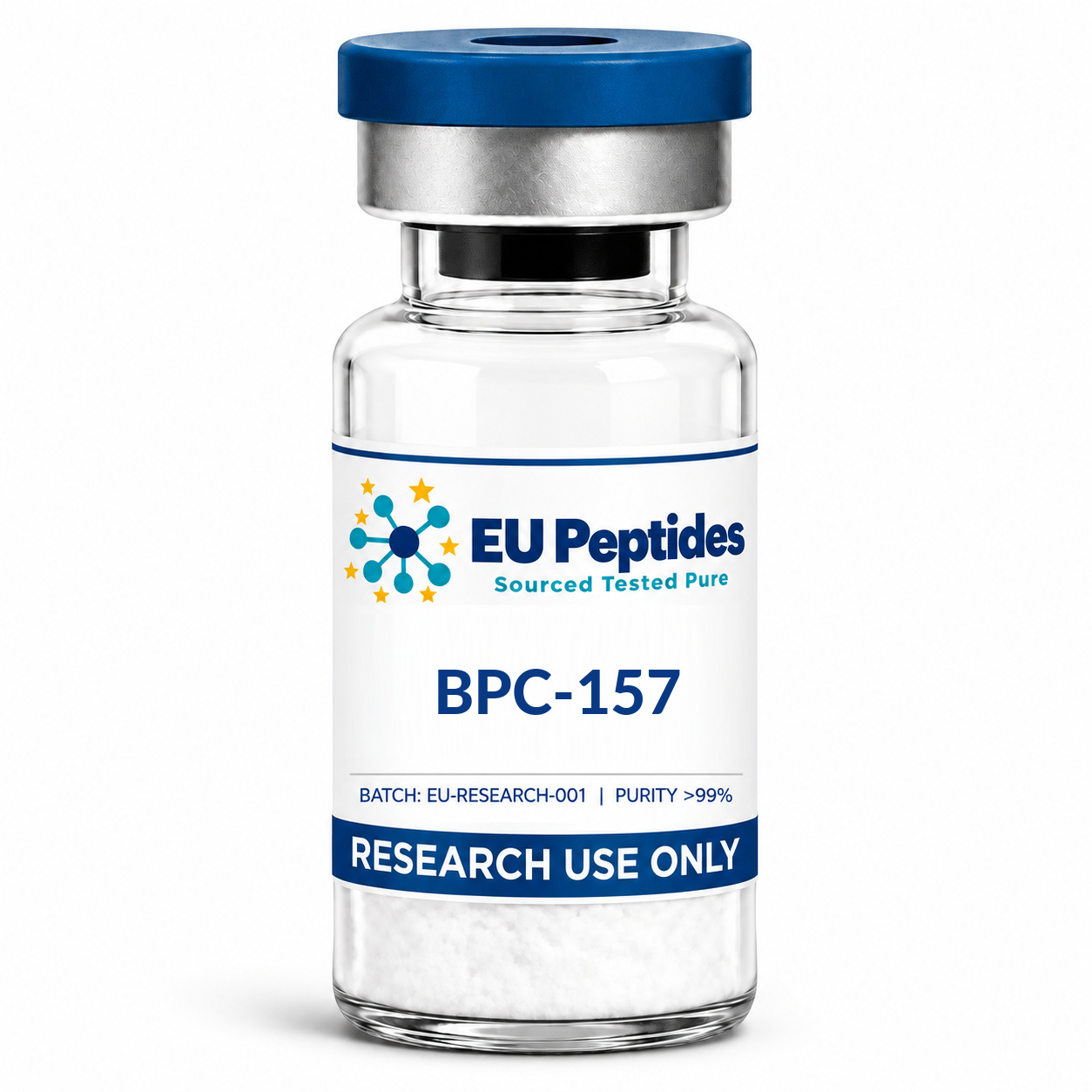
Laboratory reports are available for selected lots. Check each report for its result and stated method.

GHK-Cu
≥98% Purity
Class-level spec; selected lots third-party tested
COA Available
Batch report on request · HPLC identity check
Size
10mg
= Lab report published
€39.99
1
Total: €39.99
Free shipping on orders over €200
- If a product does not match the specification on its published COA, contact us with your batch number: we investigate against the lot report and replace any product that fails it, at no cost to you.
- Contact us within 48 hours of delivery with photos of the outer box, inner packing, and any affected vials with labels legible. Confirmed transit damage is replaced at no cost to you.
3–7 days most of the EU · 10–14 Nordics/Baltics
Standard EU from €4.99 · core EU GLS €17.99 · Dispatched within 1–2 business days · Free shipping over €200 · no customs paperwork (EU).
How Paysera and SEPA work
- Pay: send a manual SEPA transfer using the IBAN we email you, or approve a SEPA transfer via Paysera where offered.
- We confirm — Paysera notifies us instantly, or we match a manual transfer when it arrives (usually 1 business day).
- We dispatch — confirmed orders typically ship within 1–2 business days.
Card payments are not currently offered.
Research-grade GHK-Cu (Copper Tripeptide-1) for laboratory research. High purity. For research purposes only. Not for human consumption.
Volume Pricing
Applied automatically at checkout
| Quantity | Price Each | Total | Savings |
|---|---|---|---|
| 1 unit | €39.99 | €39.99 | — |
| 3+ | €37.99 | €113.97 | 5% off |
| 5+ Most Popular | €35.99 | €179.96 | 10% off |
| 10+ | €33.99 | €339.92 | 15% off |
Class-level specification on record; independent testing on selected lots.
Dispatched within 1–2 business days, shipping from €4.99 in the EU.
Ships across the EU plus Switzerland and the UK where permitted.
GHK-CU 50mg copper peptide
GHK-Cu is a copper peptide commonly sold as GHK-Cu 50mg, used in skincare, cosmetic serums, and research. Those who buy ghk-cu seek skin renewal, wound and tissue repair, anti-aging effects, improved firmness and elasticity, reduced fine lines, and decreased inflammation. It promotes collagen and elastin synthesis, supports extracellular matrix remodeling, enhances cell migration for healing, and shows antioxidant and anti-inflammatory activity; topical use may also support hair follicle health.
What Is GHK-Cu?
GHK-Cu is a naturally occurring copper peptide complex formed when glycyl-L-histidyl-L-lysine binds copper(II). Also described as copper tripeptide-1 or GHKCu, it participates in copper transport and cellular processes. The free tripeptide occurs in plasma, saliva and urine.
Copper binding gives the resulting copper complex distinct properties. Researchers should therefore distinguish the bound and unbound forms when selecting a reagent and interpreting experimental results.
What the Research Has Investigated
GHK-Cu has been investigated for its effects on cellular signalling, gene expression and pathways associated with extracellular matrix dynamics, oxidative stress and cell turnover. Preclinical studies describe responses involving wound repair, tissue remodelling and inflammatory pathways.
These findings inform experiments into matrix regulation and signal activity. They do not establish clinical benefits for the supplied research peptide or demonstrate suitability for use in people. The model, concentration and measurements used remain important when comparing published findings.
Copper Transport and Binding
Early work by Pickart and colleagues investigated GHK-Cu-mediated copper uptake in cultured cells. Binding studies have also examined interactions with human serum albumin, helping researchers understand how copper may be exchanged between binding partners.
Serum composition, competing ligands and experimental conditions can influence these interactions. Protocols should account for the surrounding medium when assessing copper transport or interpreting peptide activity.
Collagen and Matrix Turnover
Studies of GHK-Cu have examined collagen, glycosaminoglycan and proteoglycan production in fibroblasts, alongside enzymes and inhibitors involved in matrix turnover. The GHK sequence also occurs within type I collagen.
Work by Campbell and colleagues explored its relevance to tissue remodeling in models associated with emphysema. Product purity, reagent identity and supplier documentation should be assessed against the intended assay before comparing published findings with new experimental results.
Wound-Repair Models
GHK-Cu has been studied in fibroblast cultures and animal wound models to investigate matrix production and repair-associated responses. This copper peptide has also been examined in relation to MMP-2 and its tissue inhibitors.
Reproducibility depends on the model, measured copper content, peptide concentration and handling of the lyophilised material. Findings should be interpreted within the limits of each study rather than presented as universal effects.
Plasma Levels and Age
Published measurements suggest that circulating GHK levels decline with age, prompting investigation into possible relationships with tissue maintenance. These observations do not establish that supplementation reverses age-related changes.
When planning research use, distinguish measurements of the free molecule from those of its copper-bound form. Sampling procedures and analytical methods can affect comparisons.
Research Use, Handling and Storage
GHK-Cu is intended for laboratory research use only, not for human or veterinary use, treatment or diagnostics. Cosmetic copper peptide formulations differ from reagents supplied for experimental work.
- The sealed vial contains material intended for in vitro studies, not administration to people or animals.
- Use concentration-response controls and account for pH, ionic strength and chelators when evaluating peptide behaviour.
- Follow validated storage instructions. If these specify -20°C, maintain the recommended conditions and limit unnecessary temperature changes.
- For reconstitution, use the solvent specified by the assay and supplier. Sterile water is appropriate only where the protocol confirms its suitability.
- Protect the material from unsuitable light exposure and prolonged storage in solution to help preserve peptide integrity.
Product Form and Experimental Preparation
GHK-Cu 50mg is supplied in a lyophilised form. The copper-bound peptide and its unbound counterpart are distinct chemical species, and their balance can change with copper availability and other components of the experimental medium.
Record the species used, solvent, concentration and preparation conditions. Check the vial label against the accompanying documentation before starting an experiment.
Quality and Analysis
Assess GHK-Cu purity using the certificate of analysis for the supplied batch. Review HPLC results alongside identity testing and any available third-party laboratory reports.
HPLC purity alone does not establish copper content, water content or suitability for every assay. Where provided, mass spectrometry and moisture measurements offer additional information for interpreting the material’s composition and preparing consistent experiments.
Related studies:
- Connective-tissue accumulation in rat wounds
- Integrin expression and keratinocyte proliferation
- GHK-Cu-coated tissue scaffolds
Product Specifications
- Form: Lyophilized powder
- Purity: ≥98% (class-level specification)
- Storage: −20°C, protected from light
- Intended use: Laboratory research only
- Documentation: Batch certificate of analysis on request
COA Analysis
Selected lots are independently tested. Request the certificate for your batch number before the material enters an assay. Identity should match the stated sequence on the vial label.
For research purposes only. Not for human consumption.
Handling & Storage
Check the lot number against the certificate before the material enters an assay. Reconstitute only when the protocol calls for a working solution, using the solvent and concentration that protocol specifies. A prepared solution is not assumed to have the same storage life as the dry vial.
Store sealed vials at −20°C, protected from light and moisture. For research use only. Not for human or animal administration.
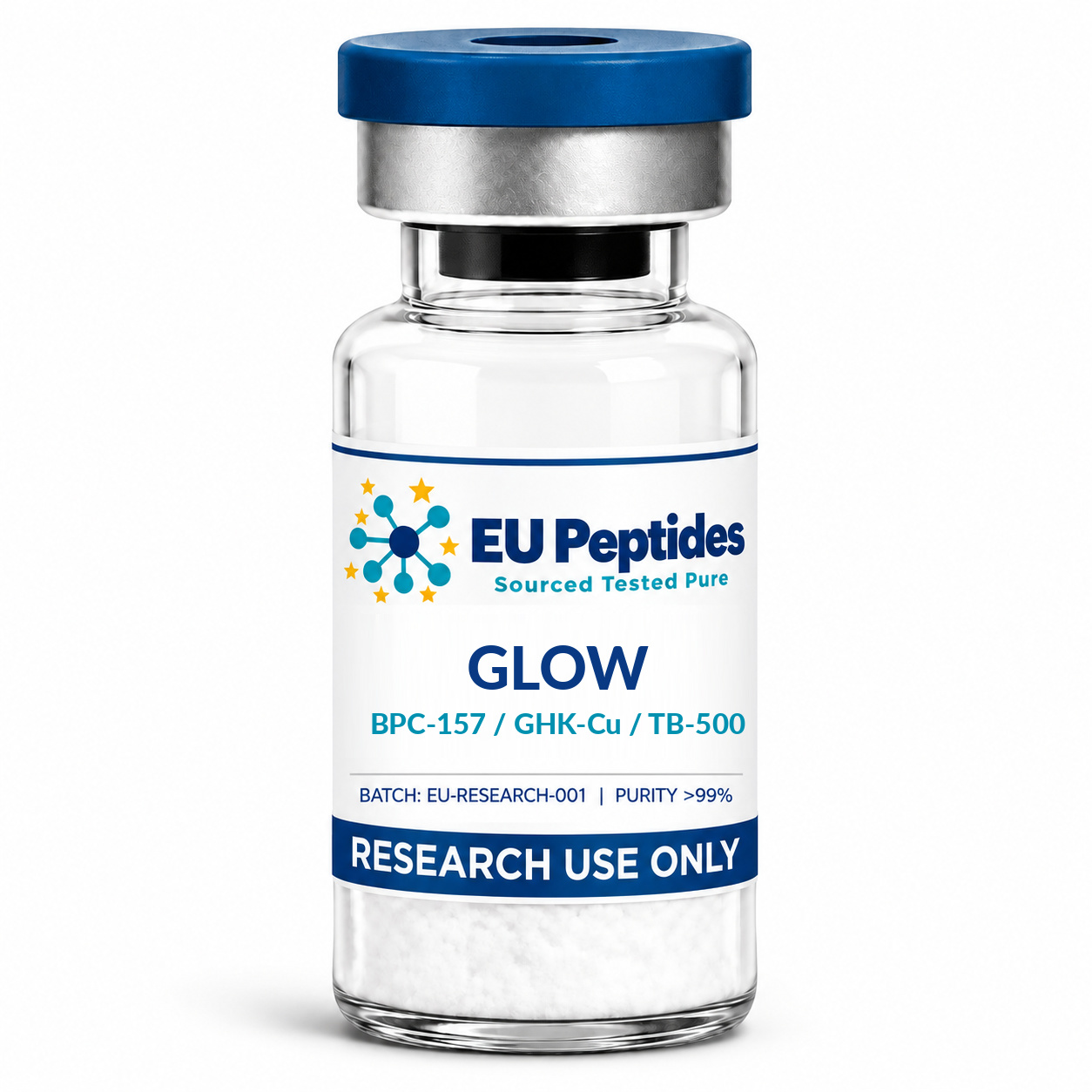
GLOW BPC-157 GHK-Cu TB-500
View details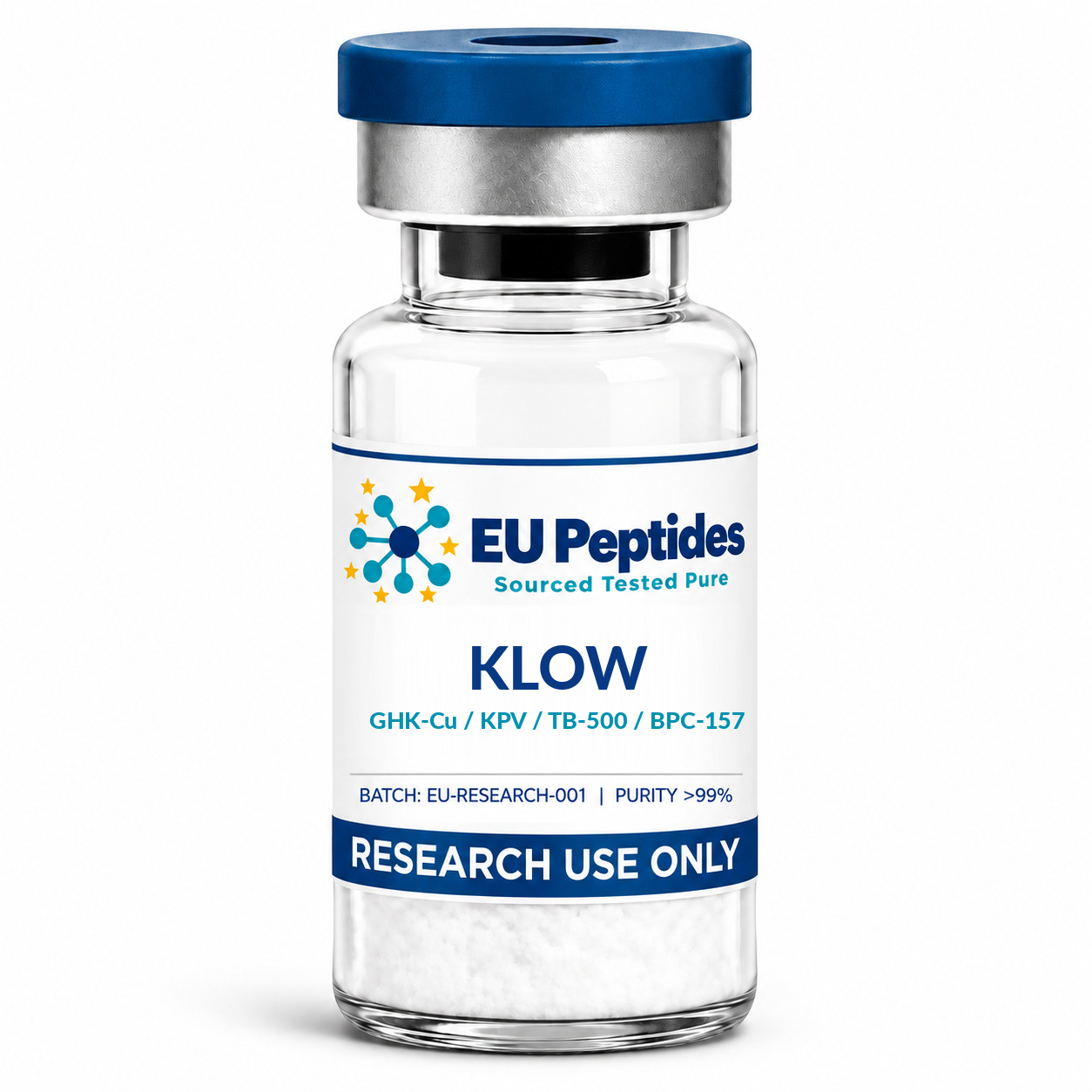
KLOW GHK-Cu KPV TB-500 BPC-157
View details