
Research article
CJC-1295 vs Ipamorelin Compared
CJC-1295 and Ipamorelin are two growth-hormone secretagogues that act through different receptors. CJC-1295 is a GHRH analog; Ipamorelin is a selective ghrelin-receptor agonist. This comparison examines how the two compounds differ in mechanism, duration, and research use.
Side-by-side comparison
| Compound | Receptor target | Primary action | Duration emphasis |
|---|---|---|---|
| CJC-1295 | GHRH receptor | Sustained pituitary stimulation | Longer-acting (especially with DAC) |
| Ipamorelin | Ghrelin receptor | Selective pulsatile GH release | Shorter, pulse-oriented |
CJC-1295
CJC-1295 is a synthetic analog of growth-hormone-releasing hormone. It is engineered to bind GHRH receptors on somatotroph cells in the anterior pituitary and thereby stimulate the gland’s natural release of growth hormone. Two principal forms are studied. The version without the drug-affinity complex has a short half-life measured in minutes and produces relatively discrete elevations. The version that includes the drug-affinity complex (commonly called CJC-1295 with DAC) incorporates a lysine linker that allows the peptide to bind circulating albumin. Once bound, it remains in the bloodstream for days rather than minutes, providing a more continuous stimulus to the pituitary. The result is an elevated baseline of growth hormone and, downstream, of IGF-1.
Researchers examine CJC-1295 for effects on metabolic markers, recovery kinetics, and longer-term endocrine patterns. Because its action is mediated through the GHRH axis, the release pattern is smoother and more sustained than the sharp pulses produced by ghrelin-receptor agonists. The DAC modification reduces the number of administrations needed to maintain exposure, which has practical implications for study design and for the interpretation of steady-state versus peak effects. The compound does not itself contain growth hormone; it amplifies the pituitary’s own secretory activity. Consequently, the magnitude of the response can still be influenced by the subject’s age, sex, body composition, and concurrent physiological state.
Ipamorelin
Ipamorelin is a pentapeptide that functions as a selective agonist at the ghrelin receptor (also known as the growth-hormone secretagogue receptor). Binding triggers a pulse of growth-hormone release from the pituitary. A distinguishing feature reported in the literature is its relative selectivity: unlike some earlier secretagogues, Ipamorelin produces minimal concurrent elevations in cortisol or prolactin under standard experimental conditions. This selectivity is one reason it is frequently chosen when investigators want a growth-hormone signal without broad endocrine spillover.
Its pharmacokinetic profile is short. Plasma levels rise and fall within hours, aligning more closely with the body’s natural ultradian rhythm of growth-hormone secretion than with the multi-day exposure of DAC-modified CJC-1295. Because of this pulse-oriented character, Ipamorelin is often administered in a pattern intended to mimic or reinforce endogenous secretory episodes. Investigators study it for endpoints related to lean mass, fat metabolism, and recovery in models where a clean, intermittent signal is preferred. It is also the most common partner for a GHRH analog: the sustained GHRH tone supplied by CJC-1295 plus the discrete ghrelin-driven pulses supplied by Ipamorelin can produce larger integrated growth-hormone exposure than either agent alone.
Mechanisms in combination
The two compounds are complementary rather than redundant. CJC-1295 acts on the GHRH receptor and raises the baseline secretory capacity of the pituitary. Ipamorelin acts on the ghrelin receptor and initiates discrete secretory pulses. When both signals are present, the pituitary can respond with both a higher floor and higher peaks. This dual input is the rationale behind the frequently studied CJC-1295 + Ipamorelin stack. The combination does not create a new hybrid molecule; each peptide continues to occupy its own receptor. The synergy is physiological, two separate pathways converging on the same endocrine cell population.
Researchers comparing the agents therefore ask different questions. Studies focused on steady-state elevations, reduced dosing frequency, or the consequences of prolonged GHRH-receptor stimulation typically center on CJC-1295 (with or without DAC). Studies focused on pulse amplitude, selectivity relative to cortisol and prolactin, or the interaction between ghrelin-receptor signaling and natural circadian timing typically center on Ipamorelin. Head-to-head or combination protocols standardize other variables; time of day, nutritional state, and assay methods, so that differences can be attributed to receptor pathway and kinetic profile rather than to procedural artifacts.
Source and quality
Identity and purity must be confirmed for the specific material in hand. Catalog codes identify the product type (CJC-1295, CJC-1295 with DAC, or Ipamorelin) and, where applicable, the nominal content. They do not identify a production run. Only the lot number does that. A usable certificate of analysis lists the same lot number that appears on the vial and reports the analytical results, typically HPLC purity and mass-spectrometric identity—obtained for that batch. Without lot-level matching, claims about the presence, identity, or purity of either peptide cannot be verified for the container being used. This control applies whether the compounds are studied separately or together.
Safety considerations in research settings
Both peptides are generally described as well tolerated in the published literature, with the most common observations being mild injection-site reactions and occasional transient fluid shifts. Because they amplify endogenous growth-hormone release rather than supplying exogenous hormone, the absolute exposure remains subject to physiological ceilings. Nevertheless, investigators monitor IGF-1, glucose, and, when relevant, cortisol and prolactin to characterize the endocrine footprint of each regimen. Sterile reconstitution and proper storage of the lyophilized material are prerequisites for preserving structural integrity; degradation products can alter both potency and the interpretation of results. Neither compound is approved by regulatory agencies for routine human therapeutic use outside of formal clinical trials; research applications therefore operate under appropriate oversight and informed-consent frameworks.
Summary
CJC-1295 and Ipamorelin both elevate growth-hormone levels, yet they do so through different receptors and with different kinetic signatures. CJC-1295, particularly the DAC-modified form, supplies a longer-acting GHRH signal that raises baseline secretion. Ipamorelin supplies selective, pulse-like ghrelin-receptor stimulation with limited spillover to other pituitary axes. The combination is frequently examined because the two signals reinforce each other, but each molecule remains distinct. Selection among monotherapy or combination designs depends on whether the research question prioritizes sustained GHRH-driven elevation, selective pulsatile release, or the integrated effect of both. In every case, lot-specific certificates of analysis confirm the identity and quality of the material actually administered.
For the broader category see the growth-hormone peptide hub. Product pages: CJC-1295, Ipamorelin, and the CJC-1295 + Ipamorelin blend.
Related products
 View details
Related product
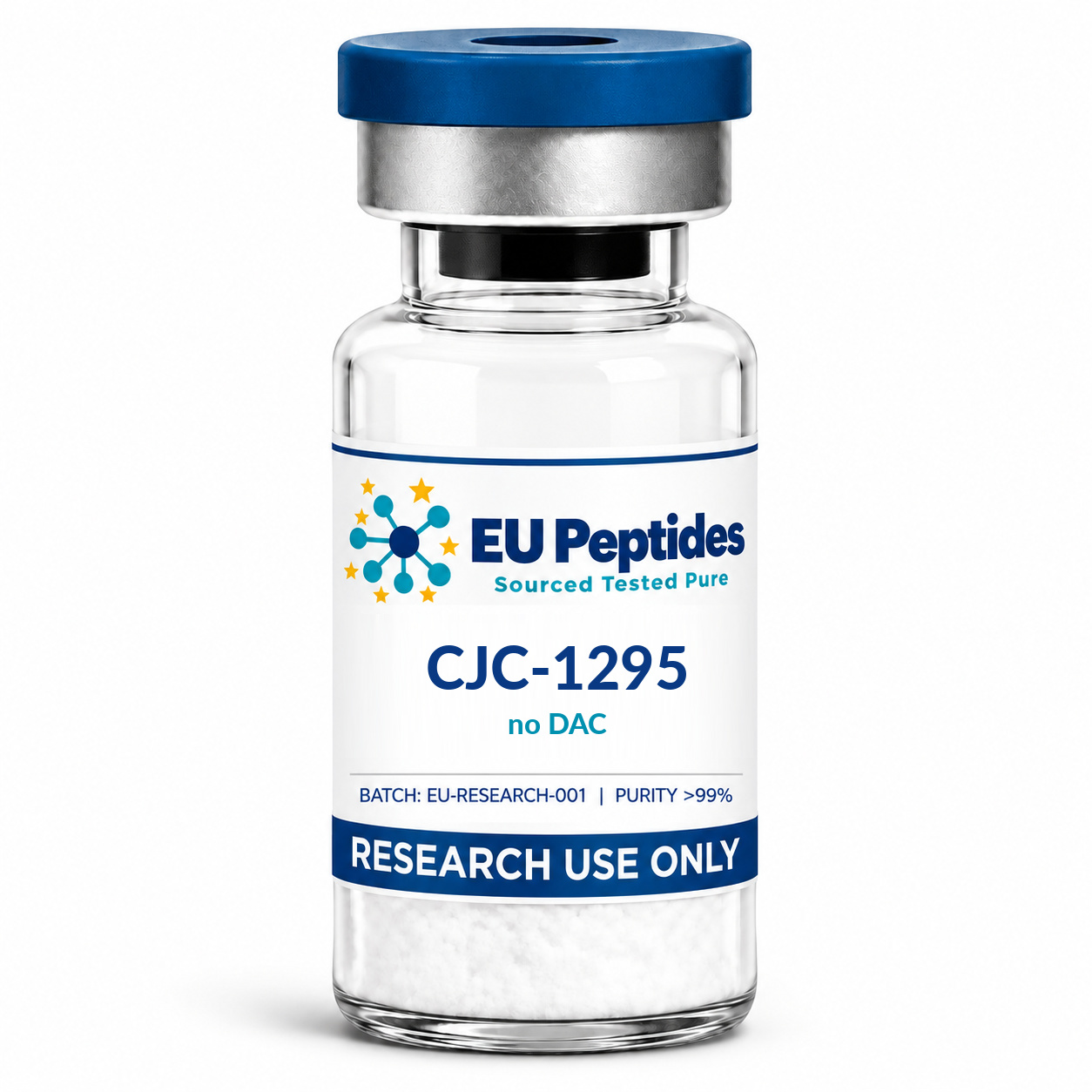
CJC-1295 no DAC
Research-grade CJC-1295 (no DAC) for laboratory studies. Supplied with available analytical documentation.
View product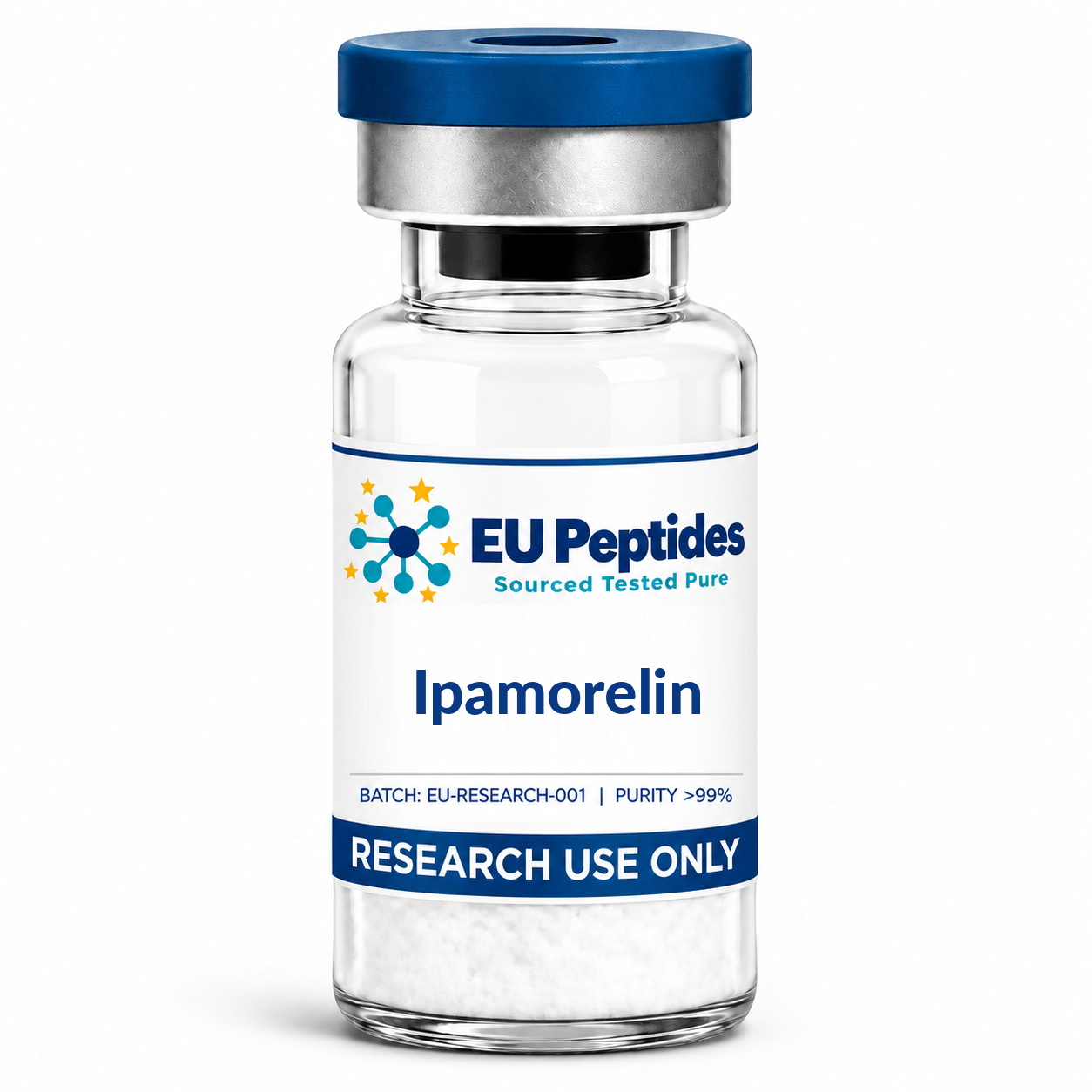 View details
Related product
Ipamorelin
Research-grade Ipamorelin peptide for controlled laboratory studies.
View product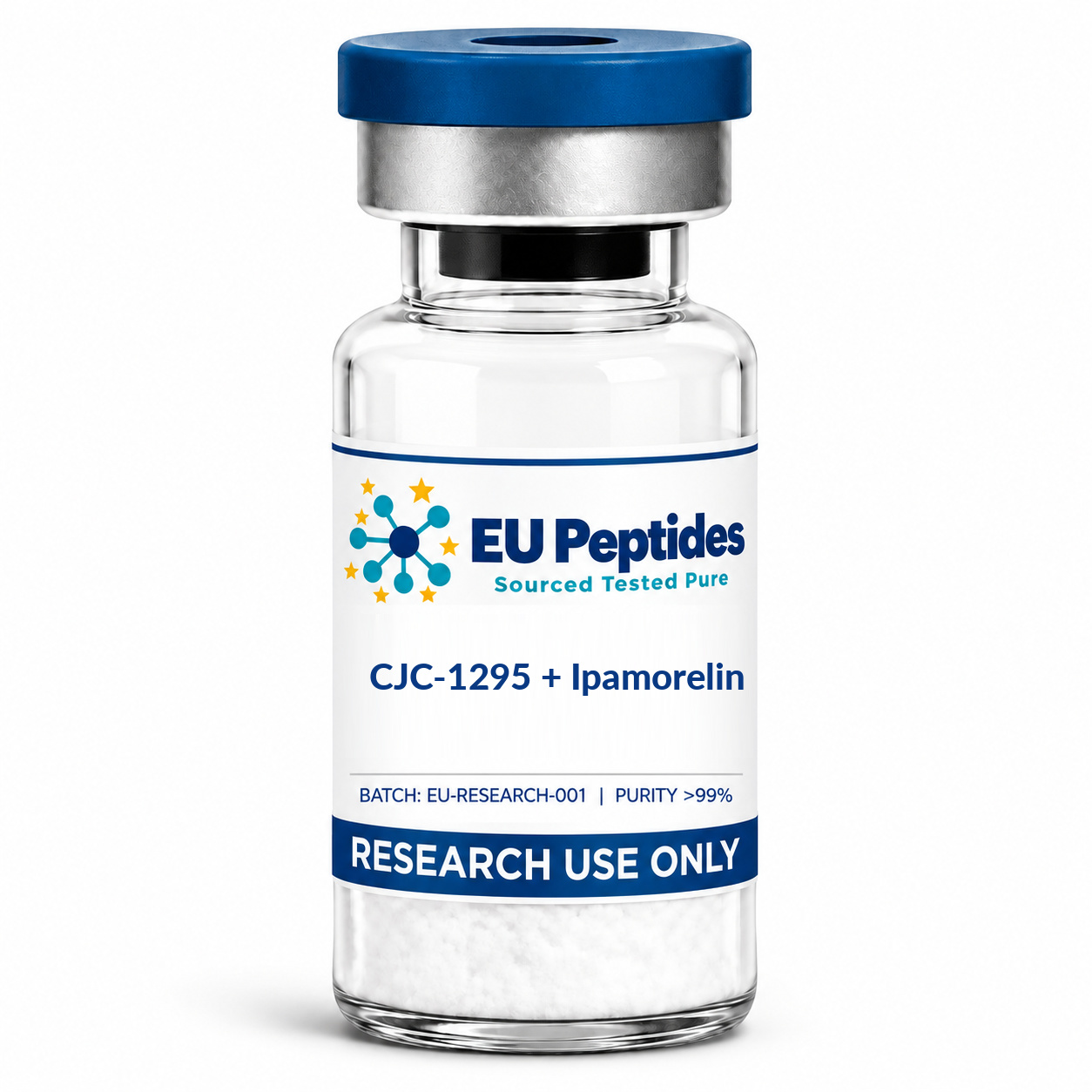 View details
Related product
CJC-1295 + Ipamorelin
Research blend of CJC-1295 and Ipamorelin for laboratory use. High-purity material.
View productAll products are supplied strictly for laboratory and analytical research. They are not for human consumption, medical use, or veterinary use.