
Research article
Melanotan II vs PT-141 Compared
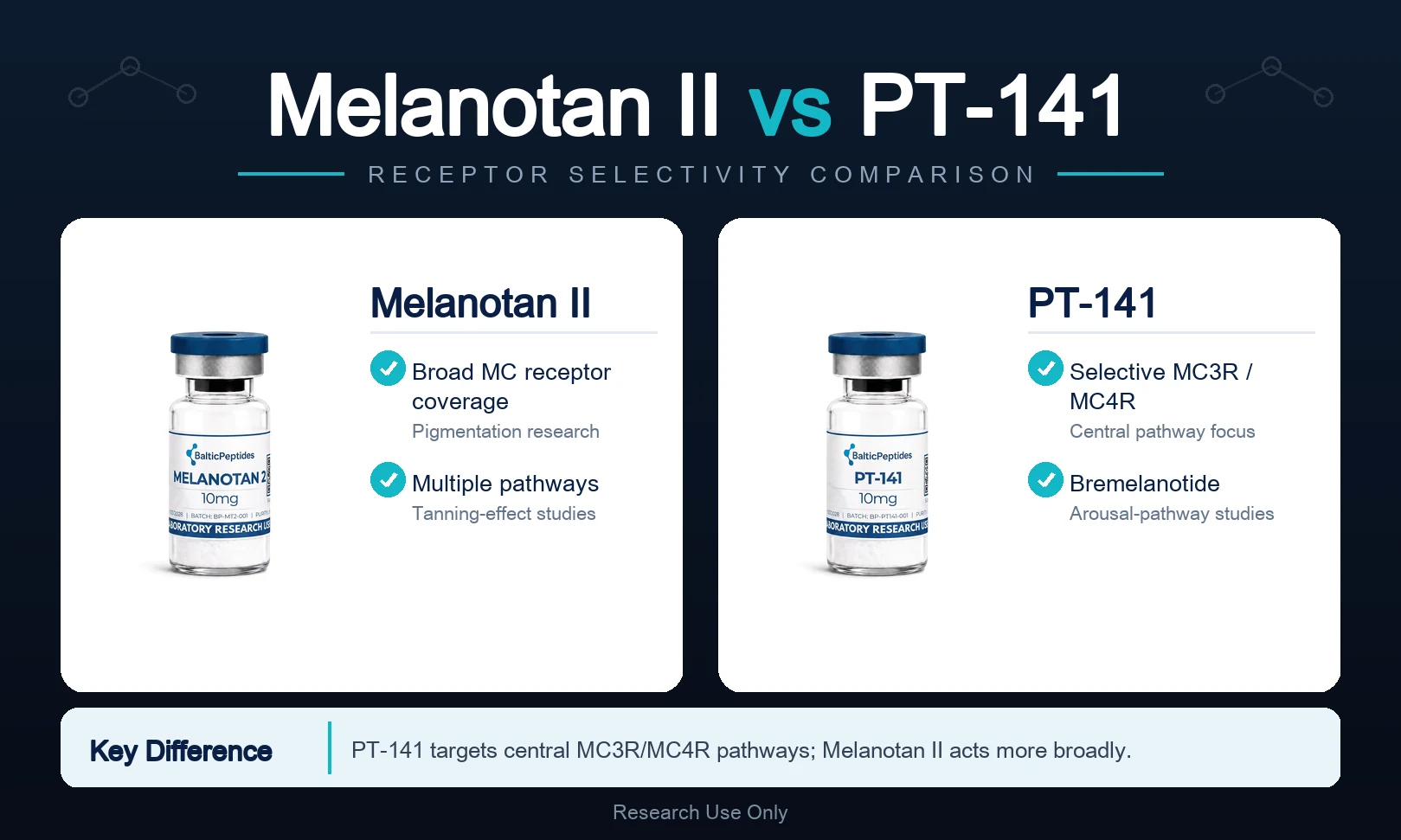
Melanotan II and PT-141 are two melanocortin peptides that differ in receptor selectivity and primary effects. Melanotan II engages multiple melanocortin receptors and is studied for pigmentation; PT-141 (bremelanotide) is more selective for central MC3R/MC4R pathways and is studied for arousal-related endpoints. This comparison examines those differences.
Side-by-side comparison
| Peptide | Primary focus | Receptor emphasis |
|---|---|---|
| Melanotan II | Skin pigmentation / tanning effects | Broad melanocortin receptor activity (including MC1R) |
| PT-141 | Neurological arousal and desire pathways | More selective for central MC3R and MC4R |
Melanotan II
Melanotan II, commonly abbreviated MT2 or Melanotan 2, is a synthetic cyclic peptide analog of alpha-melanocyte-stimulating hormone (α-MSH). It was originally developed in the 1980s and 1990s as a potential tanning agent that could stimulate melanogenesis without ultraviolet exposure. The molecule binds multiple melanocortin receptors; most notably MC1R on melanocytes, but also MC3R, MC4R, and MC5R to varying degrees. Activation of MC1R increases melanin production and distribution within the skin, producing measurable darkening in experimental models. Because the same molecule also engages central and autonomic melanocortin receptors, research observations routinely include systemic effects such as nausea, facial flushing, and changes in appetite or sexual arousal. Investigators therefore track both the intended pigmentation endpoint and the broader receptor-driven side-effect profile when they work with Melanotan II.
The compound remains designated for laboratory research. It has no approved therapeutic indication in major regulatory jurisdictions. Studies typically examine dose-response relationships for skin darkening, the time course of pigment changes, and the incidence of accompanying autonomic effects. Because its receptor engagement is broad, results obtained with Melanotan II cannot be assumed to isolate any single melanocortin pathway.
PT-141
PT-141, also known as bremelanotide, was derived from the melanotan scaffold but chemically modified to shift receptor preference. It shows substantially higher selectivity for the central melanocortin receptors MC3R and MC4R and markedly reduced activity at MC1R. As a result, it produces little to no direct stimulation of the pigmentation pathway under standard experimental conditions. Its principal studied effects occur through central nervous system circuits that influence sexual arousal and desire. Clinical development focused on hypoactive sexual desire disorder in premenopausal women; the compound received FDA approval for that indication and is marketed under the brand name Vyleesi. In research settings it is also examined for erectile function and related central arousal endpoints in male models.
The pharmacokinetic and pharmacodynamic profile of PT-141 is therefore distinct from that of Melanotan II. Onset of central effects is relatively rapid after subcutaneous administration, and the absence of strong MC1R engagement removes the tanning signal that defines Melanotan II. Investigators monitoring PT-141 focus on validated arousal and desire scales, hemodynamic responses, and the incidence of nausea or blood-pressure changes rather than on melanin indices.
Mechanisms and receptor selectivity
The structural differences between the two peptides translate directly into receptor selectivity. Melanotan II’s cyclic structure and side-chain arrangement allow it to activate a wide array of melanocortin receptors with high potency. This generalized activity accounts for both its efficacy as a tanning agent and its propensity for systemic side effects. PT-141 retains the core melanocortin pharmacophore but incorporates modifications that favor binding at central MC3R and MC4R while reducing affinity for MC1R. The result is a narrower pharmacological footprint centered on neural circuits rather than on cutaneous melanocytes.
These mechanistic distinctions explain the divergent research and clinical trajectories. Melanotan II continues to be used primarily in laboratory studies of pigmentation biology and broad melanocortin physiology. PT-141 progressed through formal clinical trials, including Phase III programs, and obtained regulatory approval for a defined central indication. The contrast illustrates how relatively small changes in peptide structure can redirect a molecule from an aesthetic research tool to a centrally acting therapeutic agent.
Source and quality
Identity and purity must be confirmed for the specific material in hand. Catalog codes identify the product type, Melanotan II or PT-141, but do not identify a production run. Only the lot number does that. A usable certificate of analysis lists the same lot number that appears on the vial and reports the analytical results, typically HPLC purity and mass-spectrometric confirmation of identity, obtained for that batch. Without lot-level matching, claims about the presence, identity, or purity of either peptide cannot be verified for the container being used. This control applies equally to research-grade Melanotan II and to any PT-141 material handled outside of commercial pharmaceutical supply.
Regulatory and practical considerations
The regulatory status of the two compounds diverges sharply. PT-141 is an FDA-approved prescription medication for a specific population and indication. Melanotan II has no such approval and is supplied only as a research chemical. In laboratory settings both substances require appropriate handling, documentation, and oversight. Researchers comparing them side by side must account for the difference in legal status when designing protocols, obtaining material, and reporting results. Storage conditions, reconstitution practices, and chain-of-custody records remain essential for both, but the approved status of PT-141 adds the further requirement of compliance with pharmaceutical distribution and prescribing rules when the commercial product is used.
Summary
Melanotan II and PT-141 share a melanocortin origin yet diverge in receptor selectivity, dominant physiological effects, and regulatory standing. Melanotan II’s broad receptor activity produces skin darkening accompanied by systemic effects and confines it to research use. PT-141’s preferential action at central MC3R and MC4R supports arousal-related endpoints and has led to formal clinical approval. Selection between them depends on whether the scientific question concerns pigmentation biology and generalized melanocortin signaling or central arousal pathways. In every case, lot-specific certificates of analysis confirm the identity and quality of the material actually studied.
For the broader category see the melanocortin peptide hub. Product pages: Melanotan II, PT-141.
Related products
 View details
Related product
Melanotan 2
Research-grade Melanotan 2 peptide for controlled laboratory use.
View product View details
Related product
PT-141
Research-grade PT-141 (Bremelanotide) for laboratory research.
View productAll products are supplied strictly for laboratory and analytical research. They are not for human consumption, medical use, or veterinary use.