
Research article
BPC-157 vs TB-500: How the Two Peptides Differ
BPC-157 and TB-500 are two of the more frequently discussed single peptides in recovery and tissue-repair research. Both are synthetic, both appear in preclinical work on healing, and both are sometimes stacked, yet they originate from different source proteins and act through different primary mechanisms. This comparison focuses on those distinctions so researchers can see where the compounds overlap and where they diverge, without treating them as interchangeable.
| Feature | BPC-157 | TB-500 |
|---|---|---|
| Origin | Derived from a protective protein found in gastric juice | Synthetic fragment based on thymosin beta-4 |
| Main research focus | Gut lining, tendons, ligaments, localized tissue | Systemic cell migration, structural repair, broader musculoskeletal models |
| Primary mechanism | Growth-factor modulation and anti-inflammatory signaling | Actin regulation that supports cell motility and reorganization |
| Typical emphasis | More targeted, local repair effects | Wider distribution and systemic recovery support |
BPC-157
BPC-157 is a pentadecapeptide whose sequence is based on a naturally occurring protective protein isolated from human gastric juice. In laboratory settings it is studied for its ability to support the integrity of the gut lining and to influence repair processes in tendons and ligaments. Researchers examine how it interacts with growth-factor pathways and inflammatory signaling, which appears to favor cell survival and more localized tissue responses. Because its origins lie in gastrointestinal protective proteins, a substantial portion of the published work looks at intestinal barrier function alongside musculoskeletal applications. The compound is generally described as stable and is investigated in both injected and oral research models, though the precise delivery context varies by study design.
TB-500
TB-500 is a synthetic peptide that corresponds to an active region of thymosin beta-4, a protein involved in actin dynamics. Actin is central to cell shape, movement, and the ability of cells to migrate into damaged areas. By influencing actin sequestration and polymerization, TB-500 is studied for its capacity to facilitate cell migration, support blood-vessel formation, and contribute to structural reorganization of tissue. The research literature often places it in broader, systemic contexts rather than strictly localized ones. Investigators look at its effects on flexibility, collagen deposition, and recovery from various forms of musculoskeletal stress in animal models. Because its parent protein is widely distributed, the peptide is frequently examined for effects that extend beyond a single tissue type.
Direct comparison of mechanisms
The most practical distinction is the primary molecular target. BPC-157 research centers on modulation of growth-factor receptors and downstream protective and anti-inflammatory signals. This profile aligns with observations of improved gut-barrier metrics and accelerated tendon or ligament healing in preclinical work. TB-500 research centers on actin. By altering actin availability, the peptide supports the physical movement of cells into injury sites and the subsequent reorganization of extracellular matrix. The two approaches are complementary in principle, one more oriented toward signaling and local protection, the other toward cellular motility and structural remodeling, yet they are not the same intervention.
Overlap exists in the general category of tissue repair. Both compounds are associated with reduced inflammatory markers and improved structural outcomes in various animal models. The difference appears in emphasis and starting point: BPC-157 is more often discussed in relation to gastrointestinal and connective-tissue sites, while TB-500 is more often discussed in relation to systemic cell migration and musculoskeletal flexibility. Researchers evaluating whether to study one, the other, or both typically begin by matching the mechanism to the specific tissue or process under investigation.
Composition, purity, and lot identification
Structural differences extend to origin and sequence. BPC-157 is modeled on a gastric protein fragment; TB-500 is modeled on a thymosin beta-4 fragment. These are distinct molecules. For research use, identity and purity must be confirmed for the specific container in hand. Catalog codes identify the product type; they do not identify a production run. Only the lot number does that. A usable certificate of analysis lists the same lot number that appears on the vial and reports the analytical results for that batch. Without a matching lot, claims about purity or composition cannot be tied to the material being used. This lot-matching step is a basic control regardless of which peptide is under study.
Practical considerations in research design
Protocol design usually starts with the research question rather than a default preference for one compound. If the focus is gut-barrier integrity or highly localized tendon and ligament work, the literature on BPC-157 is the more direct reference. If the focus is cell migration, actin-related structural remodeling, or broader musculoskeletal recovery models, TB-500 literature is more relevant. Some investigators examine the two together to explore potential complementary effects, but that remains a separate experimental choice that requires its own controls. In all cases, verification of lot-specific identity and purity precedes interpretation of any outcome.
For the wider set of recovery peptides see the recovery peptide hub. Product pages with specifications are available for BPC-157 and the Wolverine BPC-157 + TB-500 blend.
Both peptides continue to appear in preclinical literature on tissue repair, yet they remain distinct tools. Selection depends on matching origin, primary mechanism, and research emphasis to the question being asked, supported by lot-level documentation that confirms what is actually in the vial.
Related products
 View details
Related product
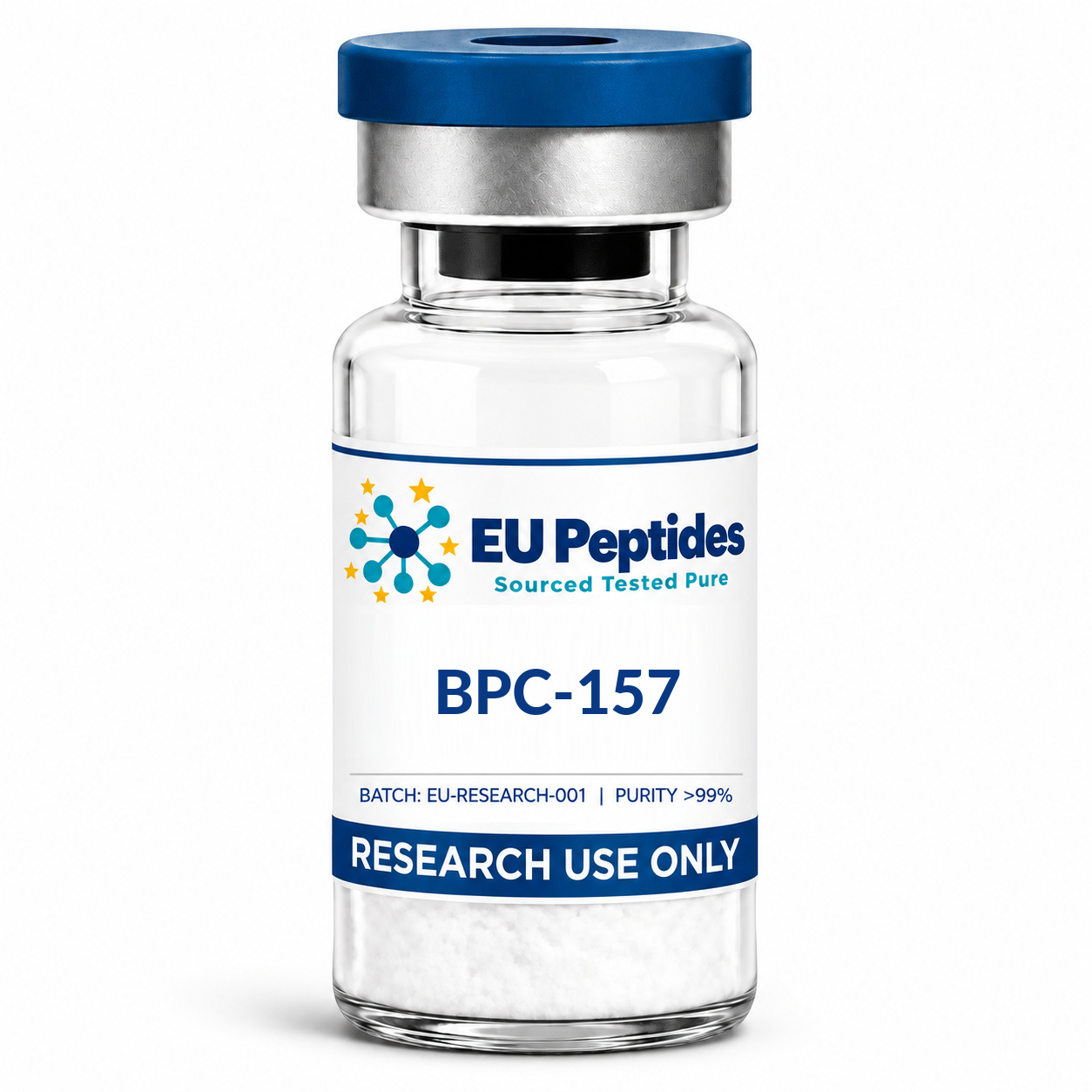
BPC-157
Research-grade BPC-157 (Body Protection Compound) for in-vitro laboratory studies. Batch documentation available.
View productAll products are supplied strictly for laboratory and analytical research. They are not for human consumption, medical use, or veterinary use.