 View details
Research compound
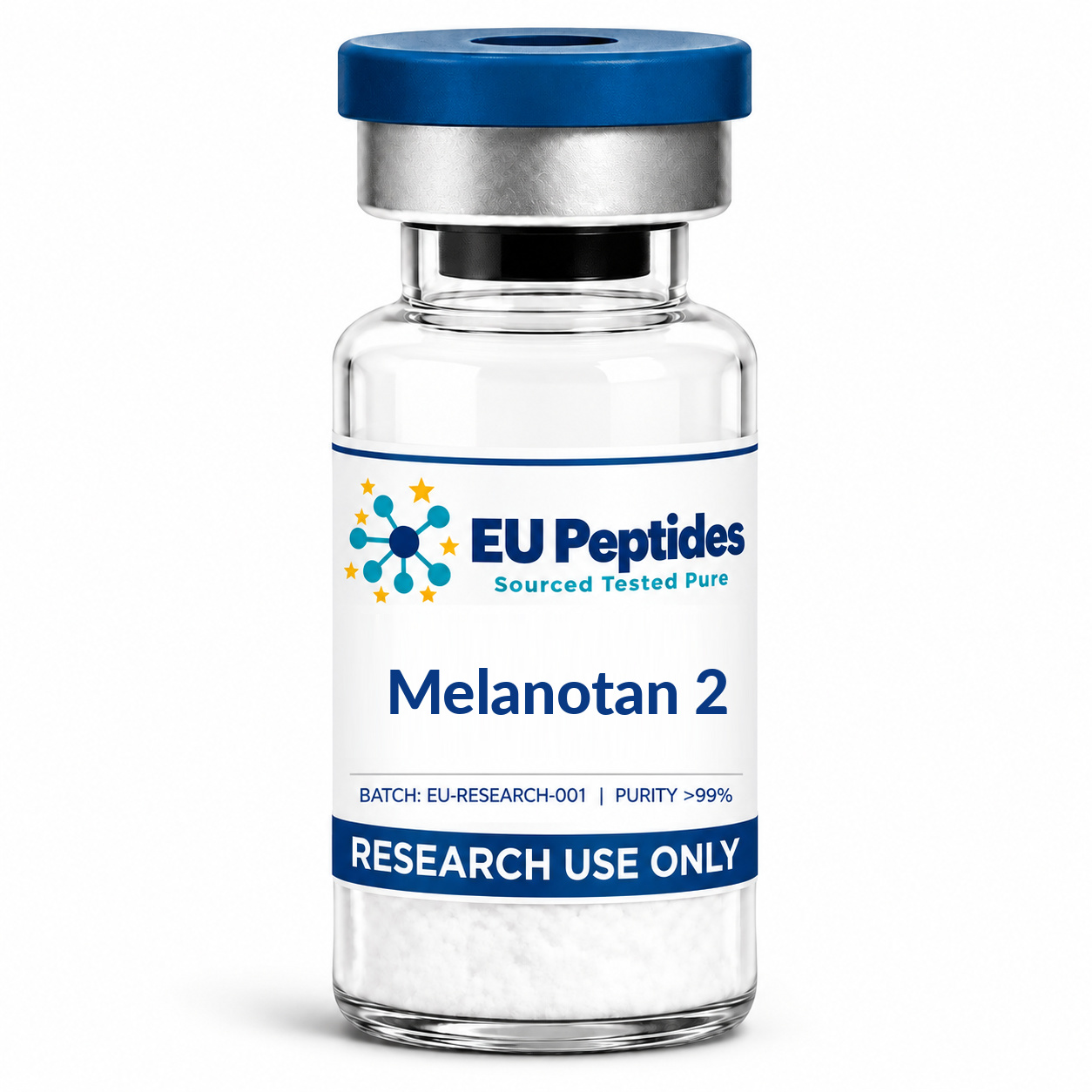
Melanotan 2
A synthetic analogue studied for melanocortin receptor activity.
View compound
Research area
Melanotan I, Melanotan II and PT-141 are three distinct synthetic peptides associated with melanocortin receptor research. Each named vial contains one peptide as its research compound. None is a blend. They are grouped because they are related to alpha-melanocyte-stimulating hormone, usually shortened to alpha-MSH, and are studied for interactions with the melanocortin receptor family.
View details
Research compound
A synthetic analogue studied for melanocortin receptor activity.
View compound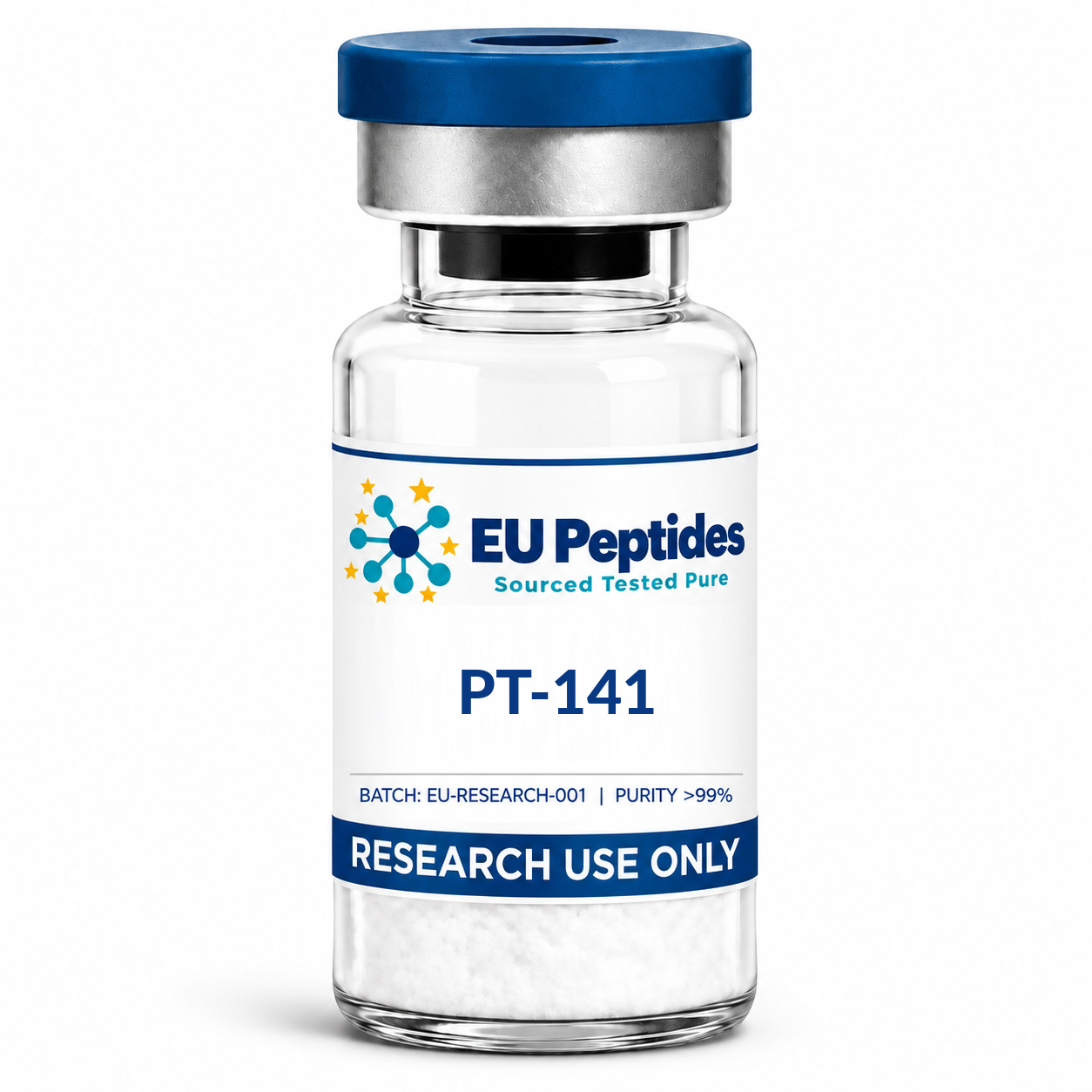 View details
Research compound
A melanocortin receptor agonist used in controlled laboratory research.
View compoundTheir shared background does not make them interchangeable. A listing in this category is not a claim that the supplied vial changes pigmentation, treats a condition or improves any function. The research describes particular molecules tested under particular conditions.
Melanocortin receptors are proteins that receive chemical signals and trigger responses inside cells. Researchers examine how peptides bind to these receptors, whether they activate them and which signals follow. An activating compound is called an agonist.
The receptor subtype matters. A finding at MC1R, which is associated with pigment biology, does not establish the same response at MC4R. Nor does a peptide’s activity at one receptor mean it acts only at that receptor. The tested receptor and the measured response should remain clear when comparing papers.
Melanotan I, also known as afamelanotide or NDP-alpha-MSH, is a linear peptide containing 13 amino acids. “Linear” means its peptide chain is not closed into the ring structure found in Melanotan II. Research includes pigment-cell signalling and melanocortin receptor activation.
Melanotan II is a shorter, cyclic peptide containing seven amino acids. A chemical link between two side chains holds part of the molecule in a ring. This structural difference helps distinguish it from Melanotan I; the names do not describe two strengths of the same material.
PT-141, also called bremelanotide, is another cyclic peptide containing seven amino acids. It is closely related to Melanotan II but has a different chemical group at one end: a carboxylic acid rather than an amide. That difference identifies a separate compound, not a renamed Melanotan II vial. Research includes melanocortin receptor binding and signalling, particularly questions involving MC3R and MC4R.
Hadley and colleagues compared linear and cyclic alpha-MSH fragment analogues in frog and lizard skin assays and a mouse melanoma-cell assay. They measured pigment-related responses and resistance to enzyme breakdown. This work illustrates why peptide structure and experimental model matter: activity was assessed in specific biological systems, not established for every material carrying a related name. These were model findings, not human outcomes.
Zhang and colleagues examined how afamelanotide and bremelanotide interact with MC4R. They used cryo-electron microscopy to produce detailed structures of receptor complexes, alongside laboratory signalling experiments. Although the receptor was human, these were molecular and laboratory systems, not a trial measuring effects in people. The study does not establish activity for the vials described here.
Pigment-cell questions also overlap with dermatology research. That overlap concerns the subject being studied; it does not transfer findings between compounds or categories.
| Vial | What is in it | What the studies look at | Page |
|---|---|---|---|
| Melanotan I | Melanotan I, also called afamelanotide; one linear peptide of 13 amino acids | Pigment-cell signalling and melanocortin receptor activation | Product page not yet available |
| Melanotan II | Melanotan II; one cyclic peptide of seven amino acids | Melanocortin receptor activity and pigment-related responses in experimental models | Melanotan II |
| PT-141 | Bremelanotide; one cyclic peptide, chemically distinct from Melanotan II | Receptor binding and signalling, including MC3R and MC4R research | PT-141 |
The compound name identifies the intended research material. The stated vial amount identifies the quantity supplied. Neither establishes the measured purity of a batch or shows that it will reproduce a published experiment.
When reading a comparison, check whether it measures receptor binding, cell signalling or a response in an animal model. Those are different endpoints. A stronger signal in one assay is not a general ranking of the three peptides, and a paper on Melanotan II does not document PT-141.
Batch certificates are not yet available, so no batch-specific purity result is stated here.
A batch will be listed for sale only after its certificate has been checked. The lot number on the file must match the lot number on the vial. If the numbers are missing or do not match, that batch is not listed. A certificate for another lot, or for a related melanocortin peptide, cannot serve as its documentation.
The acceptance requirement is at least 99% purity by HPLC. This is the listing threshold, not a measured result for uncertified material. The figure published for a batch must be the figure on that batch’s certificate.
HPLC separates components in the tested sample to assess purity under the stated method. Where the certificate includes mass spectrometry, that result is also reviewed for evidence supporting identity. Neither test demonstrates receptor activity or a biological outcome.
All products are supplied strictly for laboratory and analytical research. They are not for human consumption, medical use, or veterinary use.