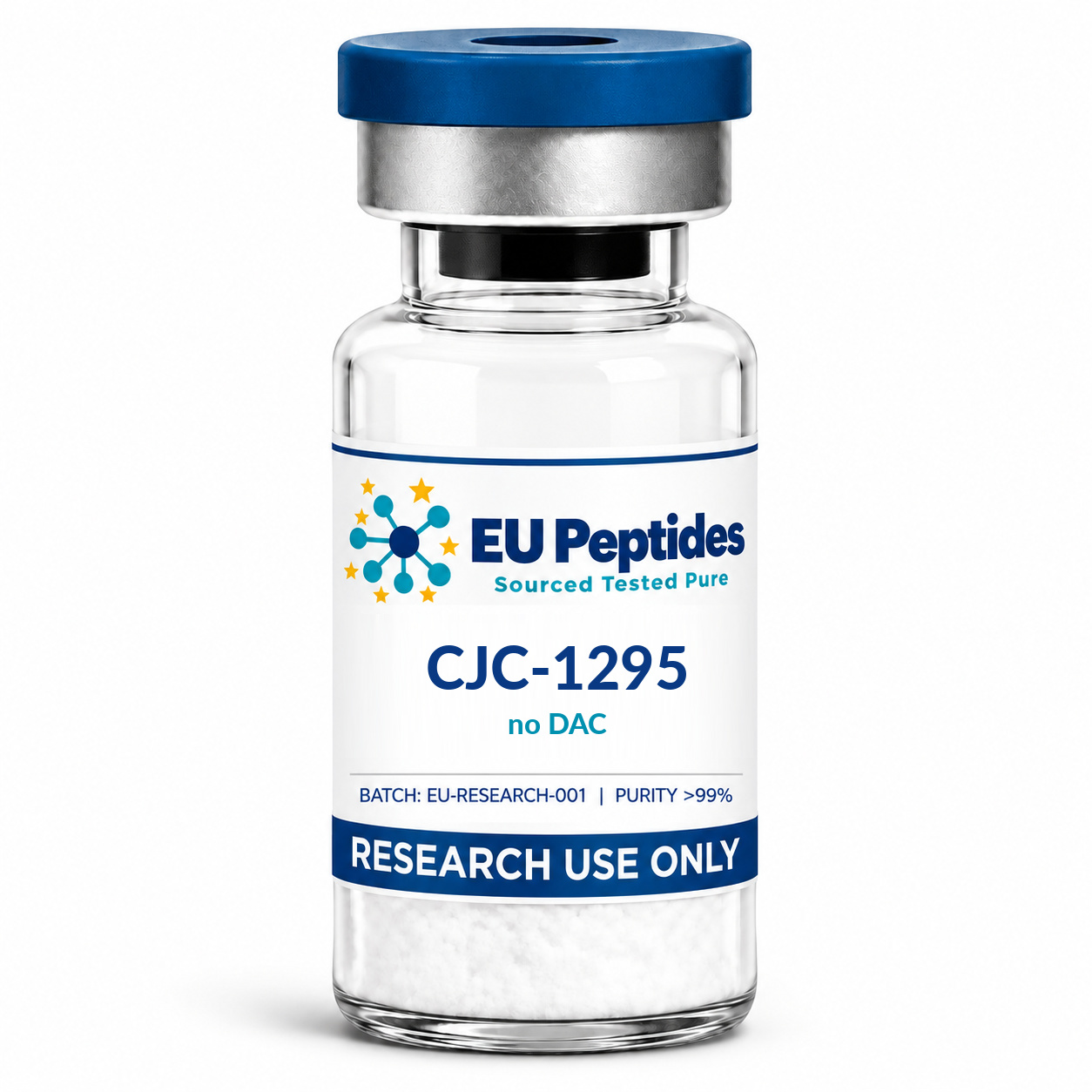
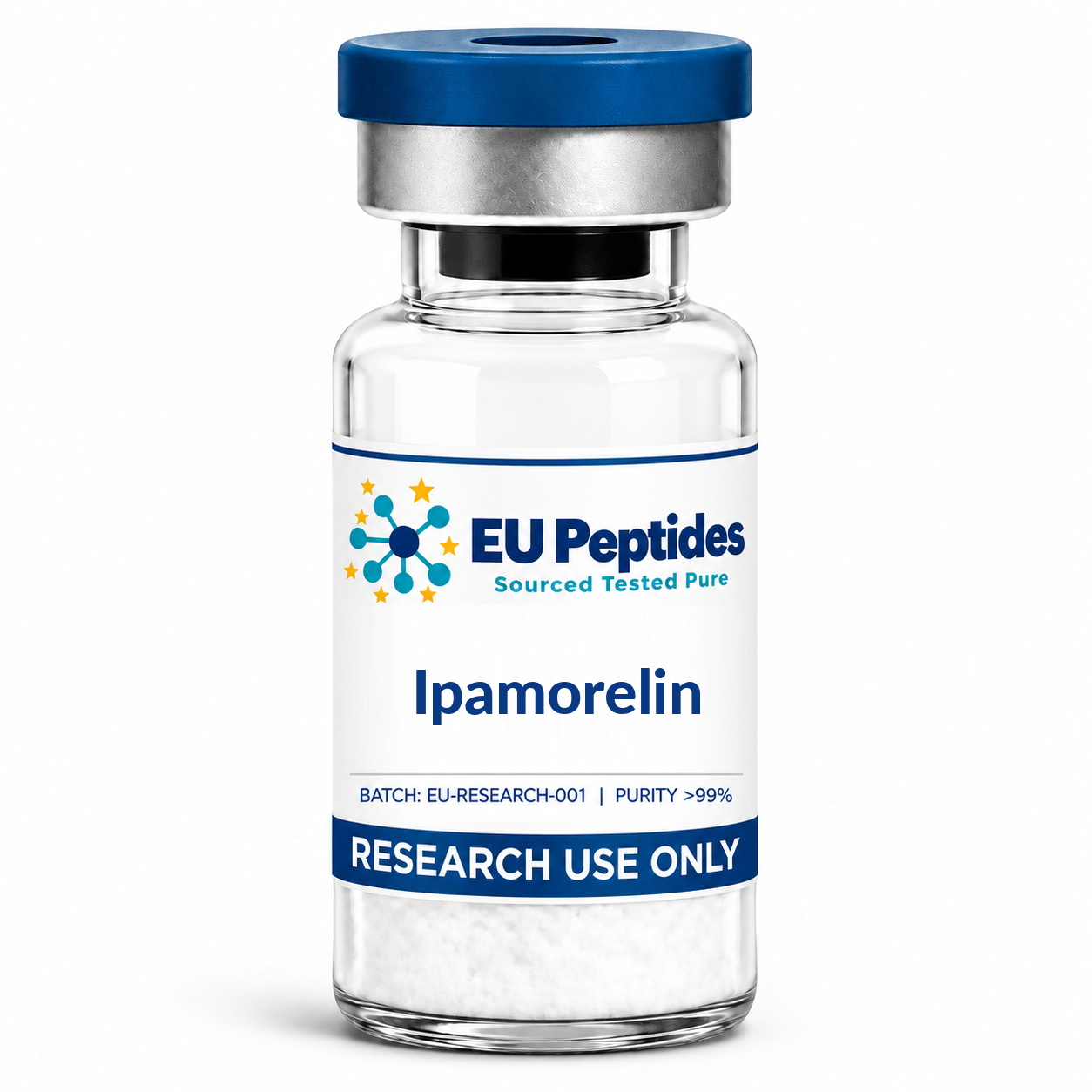
Laboratory reports are available for selected lots. Check each report for its result and stated method.

CJC-1295 + Ipamorelin
≥98% Purity
Class-level spec; selected lots third-party tested
COA Available
Batch report on request · HPLC identity check
Size
10mg
= Lab report published
€39.99
1
Total: €39.99
Free shipping on orders over €200
- If a product does not match the specification on its published COA, contact us with your batch number: we investigate against the lot report and replace any product that fails it, at no cost to you.
- Contact us within 48 hours of delivery with photos of the outer box, inner packing, and any affected vials with labels legible. Confirmed transit damage is replaced at no cost to you.
3–7 days most of the EU · 10–14 Nordics/Baltics
Standard EU from €4.99 · core EU GLS €17.99 · Dispatched within 1–2 business days · Free shipping over €200 · no customs paperwork (EU).
How Paysera and SEPA work
- Pay: send a manual SEPA transfer using the IBAN we email you, or approve a SEPA transfer via Paysera where offered.
- We confirm — Paysera notifies us instantly, or we match a manual transfer when it arrives (usually 1 business day).
- We dispatch — confirmed orders typically ship within 1–2 business days.
Card payments are not currently offered.
Research blend of CJC-1295 and Ipamorelin for laboratory use. High-purity material. For research purposes only. Not for human consumption.
Volume Pricing
Applied automatically at checkout
| Quantity | Price Each | Total | Savings |
|---|---|---|---|
| 1 unit | €39.99 | €39.99 | — |
| 3+ | €37.99 | €113.97 | 5% off |
| 5+ Most Popular | €35.99 | €179.96 | 10% off |
| 10+ | €33.99 | €339.92 | 15% off |
Class-level specification on record; independent testing on selected lots.
Dispatched within 1–2 business days, shipping from €4.99 in the EU.
Ships across the EU plus Switzerland and the UK where permitted.
CJC-1295 + Ipamorelin Peptide
CJC-1295 + Ipamorelin is a research mixture supplied as a lyophilised powder, combining a GHRH analogue, CJC-1295 without DAC (mod GRF 1-29), with the pentapeptide Ipamorelin. The two components act at different receptors, GHRH and GHS-R1a, so published findings on either one do not describe the mixture. The sections below give the Ipamorelin sequence and specifications, the difference between the non-DAC form and the long-acting form, and what to check on amount, ratio, certificate, and storage before the vial is used in an assay. For laboratory research only. Not for human or veterinary administration.
What is Ipamorelin?
Ipamorelin is a synthetic pentapeptide investigated for its activity at the ghrelin receptor, GHS-R1a. Its sequence is Aib-His-D-2-Nal-D-Phe-Lys-NH₂. Researchers study this receptor because of its involvement in growth hormone secretion and related endocrine processes.
Raun and colleagues characterised Ipamorelin in 1998, reporting selective growth hormone release in the experimental systems examined. These findings helped establish its role as a research peptide, but they should not be interpreted as a guarantee that other hormonal responses are absent under all conditions. Model selection, concentration, and exposure duration remain important when evaluating published results.
How the Components Differ
The CJC component is associated with GHRH-receptor activity, while Ipamorelin acts through GHS-R1a. Their different receptor targets provide a rationale for investigating complementary signalling pathways in appropriately designed studies.
However, separate mechanisms do not automatically establish a predictable combined response. Experiments should distinguish observations about each compound from findings obtained with the specific combination. Claims about physiological hormone patterns, preserved feedback mechanisms, or superior activity require evidence from the relevant formulation and experimental setting.
Product Identity and Specifications
Confirm the identity of both components before selecting a blend. Product names alone may not fully describe the molecular form, quantity, or analytical specification. The accompanying documentation should allow researchers to match the supplied material to their protocol.
The following details describe Ipamorelin as listed in the supplied product information:
| Property | Listed specification |
|---|---|
| CAS number | 170851-70-4 |
| Molecular formula | C₃₈H₄₉N₉O₅ |
| Molecular weight | Approximately 711.85 g/mol |
| Sequence | Aib-His-D-2-Nal-D-Phe-Lys-NH₂ |
Check whether the supplier reports the free compound or a salt form, as this can affect how molecular weight and labelled content are interpreted. Document any relevant counterion or water-content information when calculating experimental concentrations.
Understanding the DAC Designation
The material commonly sold as CJC-1295 without DAC is also called Mod GRF 1-29. It should be distinguished from the albumin-binding, longer-acting form studied in some published clinical work.
Teichman and colleagues’ 2006 study examined long-acting CJC-1295. It does not directly validate the behaviour of the shorter-acting form or its combination with Ipamorelin. Match literature references to the actual substance being supplied rather than assuming that all similarly named products share the same properties.
Vial Content and Presentation
The source description refers to a 10mg + 10mg presentation. If confirmed by the supplier, this means 10 mg of each component and 20 mg total per vial. It should not be described as a ten-milligram total product.
| Specification | What to confirm |
|---|---|
| Components | Exact identity of both substances |
| Total peptide content | Combined quantity stated on the label |
| Component ratio | Whether the declared 1:1 ratio refers to mass |
| Presentation | Sealed vial containing lyophilised powder |
An equal mass ratio is not an equal molar ratio because the components have different molecular weights. This distinction matters when comparing receptor responses or designing studies around defined molecular concentrations. A fixed blend also limits the ability to vary each component independently.
Storage and Handling
Store the sealed powder according to the supplier’s validated instructions, with protection from unsuitable light, moisture, and temperature conditions. Record receipt dates and inspect the packaging before opening it.
The original description gives conflicting directions about freezing prepared solutions and different suggested periods of stability. These should be resolved through product-specific documentation. Do not assume that a general storage recommendation establishes how long the combined formulation remains suitable for an assay.
After preparation, store solutions under the conditions supported by the relevant protocol. Label containers with their contents, preparation date, and concentration, and document any temperature excursions that could affect interpretation of results.
Reconstitution for Laboratory Work
Before you reconstitute the material, confirm the solvent, target concentration, and preparation method required by the assay. Bacteriostatic water is appropriate only where its preservative and composition are compatible with both components and the experimental system.
Follow documented mixing procedures and inspect the solution as required by the protocol. Dissolution alone does not confirm chemical stability or retained activity. For a combined product, the preparation conditions must be suitable for both constituents rather than inferred from information about only one.
Quality Assurance and Documentation
Request a batch-specific certificate of analysis and review the methods used to assess the supplied material. HPLC results can support purity assessment, while mass spectrometry can provide identity information.
For a blend, check whether the analytical method distinguishes the components and whether the report supports the stated ratio. A purity percentage or chromatogram alone does not necessarily establish the amount of each substance present. Any claims about independent testing or endotoxin levels should be supported by documentation for the actual product.
Interpreting Combined-Use Studies
A CJC-1295 + Ipamorelin blend provides a way to investigate two receptor systems within one experimental design. Suitable controls may include the individual components and an appropriate vehicle control, allowing researchers to assess whether the combined response differs from either substance alone.
The studies cited above concern individual compounds; they do not, by themselves, demonstrate synergy for the supplied combination. Interpret changes in hormone secretion, signalling, or downstream measurements in relation to the specific model and study conditions.
Researchers planning to buy CJC-1295 + Ipamorelin should select a peptide formulation that matches their experimental question and documentation requirements. This product is intended for laboratory research use only, not for human consumption, administration to people or animals, or clinical or diagnostic applications.
Related studies:
Product Specifications
- Form: Lyophilized powder
- Purity: ≥98% (class-level specification)
- Storage: −20°C, protected from light
- Intended use: Laboratory research only
- Documentation: Batch certificate of analysis on request
COA Analysis
Selected lots are independently tested. Request the certificate for your batch number before the material enters an assay. Identity should match the stated sequence on the vial label.
For research purposes only. Not for human consumption.
Handling & Storage
Check the lot number against the certificate before the material enters an assay. Reconstitute only when the protocol calls for a working solution, using the solvent and concentration that protocol specifies. A prepared solution is not assumed to have the same storage life as the dry vial.
Store sealed vials at −20°C, protected from light and moisture. For research use only. Not for human or animal administration.