 View details
Research compound
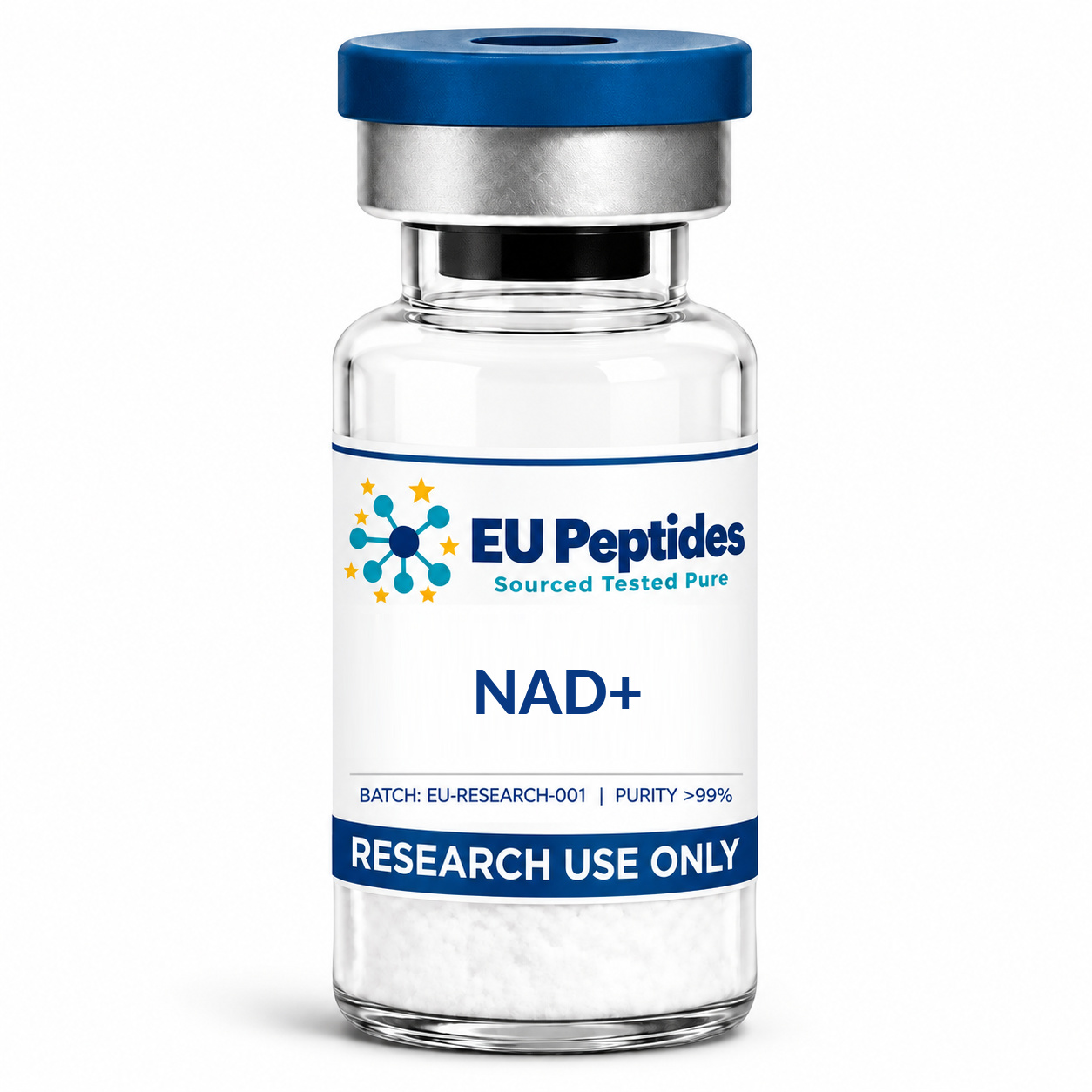
NAD+
A cellular coenzyme studied in energy metabolism and redox biology.
View compound
Research area
This category covers two separate materials: NAD+ and MOTS-c. They are not a blend. NAD+ is a coenzyme—a molecule that participates in enzyme reactions. MOTS-c is a 16-amino-acid peptide. They appear together here only because both show up in research on mitochondrial biology, cellular metabolism, and how cells respond to changing conditions.
View details
Research compound
A cellular coenzyme studied in energy metabolism and redox biology.
View compound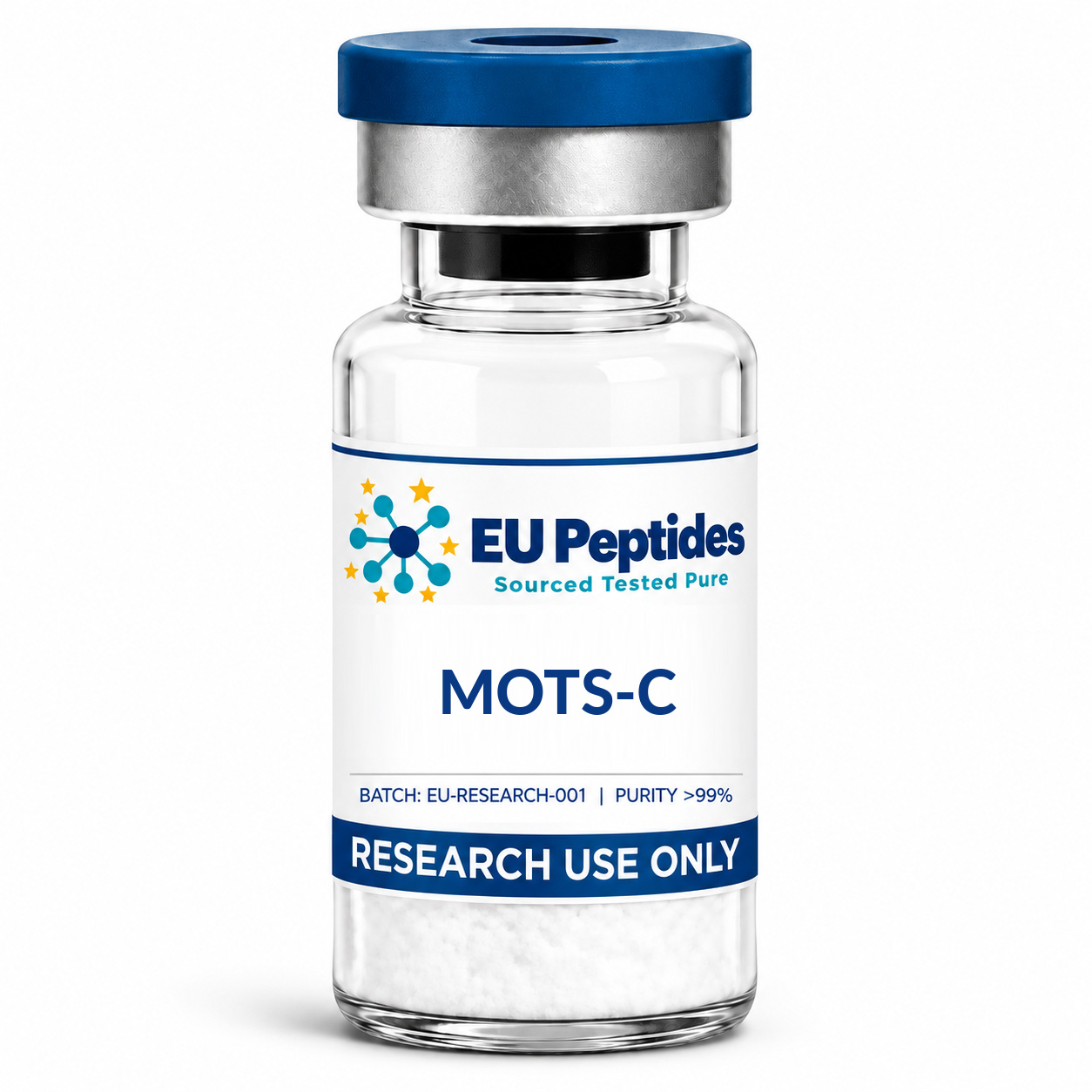 View details
Research compound
A mitochondrial-derived peptide studied in cellular energy research.
View compoundListing them on the same page does not mean either one repairs mitochondria, treats a condition, or improves energy, performance, or lifespan. An NAD+ vial contains nicotinamide adenine dinucleotide in its oxidized form. A MOTS-c vial contains the peptide MOTS-c. Sharing a research topic does not make the two compounds interchangeable.
Mitochondria handle many of the reactions cells use to process nutrients and produce ATP. Researchers studying these compounds usually ask narrow questions: how a substance gets into mitochondria, how cells handle fuel under specific conditions, or how a signaling pathway changes in an experiment.
Those questions use different measurements. The amount of a molecule inside mitochondria is one measurement; oxygen consumption is another. A change in either has to be read in the context of the experiment that produced it.
One practical question in NAD+ research is how the coenzyme reaches the inside of mitochondria. Luongo and colleagues studied a transport protein called SLC25A51. In cell systems and isolated mitochondria, removing this protein lowered mitochondrial NAD+ and disrupted mitochondrial respiration. Whole-cell NAD+ levels did not drop the same way. That distinction matters because a measurement across an entire cell can miss what is happening in one compartment. These were laboratory findings, including work with human-derived cells, not results from giving NAD+ to people (PMID: 32906142).
The paper shows why transport and location matter for NAD+. It does not show that adding a supplied NAD+ product to an experimental system will reproduce those findings.
MOTS-c is a short peptide encoded by a small open reading frame in mitochondrial DNA. Its research context centers on signaling and metabolic regulation. Lee and colleagues looked at MOTS-c in cultured cells and mice, examining changes in metabolic pathways and signaling involving AMPK, an enzyme that responds to cellular energy status. The work gives a basis for studying how a mitochondrial-derived peptide relates to processes elsewhere in the cell. The results came from experimental models, not a human treatment trial (PMID: 25738459).
In short, NAD+ appears in studies of a coenzyme and its transport; MOTS-c appears in studies of a peptide and metabolic signaling. Neither line of research establishes what an EU Peptides vial will do in any given experiment.
| Vial | What is in it | What the studies look at | Page |
|---|---|---|---|
| NAD+ | Nicotinamide adenine dinucleotide, oxidized form. A coenzyme, not a peptide. | Mitochondrial NAD+ transport, its distribution within cells, and measurements of mitochondrial respiration. | View NAD+ |
| MOTS-c | The individual 16-amino-acid MOTS-c peptide. | Metabolic pathways and AMPK-linked signaling in cell and mouse models. | View MOTS-c |
Start with the named material in the paper’s methods. For NAD+, check that the experiment used NAD+ itself and note the chemical form specified. For MOTS-c, check the peptide identity and whether the experiment used the peptide alone or a preparation that contained additional ingredients.
Then compare the stated amount and formulation with the product details. A shared compound name is only the starting point. Differences in preparation, cell type, or measurement can limit how closely a listing matches the published experiment.
These topics also overlap with the longevity research category and the metabolic research category. Those pages offer related browsing routes; their names do not add evidence about either material.
Batch certificates are not yet available, so this page does not present a verified purity figure for either vial.
The certificate rule is specific: a batch is listed as certificate-verified only after its file has been checked, and the lot on that file must match the lot on the vial. A missing or mismatched file cannot verify that batch.
The acceptance threshold is at least 99% by HPLC, a method that separates components in the tested sample. This is a threshold, not a current batch result. Any published purity figure must be the figure recorded on that batch’s certificate. Mass spectrometry results should be reported only where the certificate includes them. Neither analytical method establishes a mitochondrial effect.
All products are supplied strictly for laboratory and analytical research. They are not for human consumption, medical use, or veterinary use.