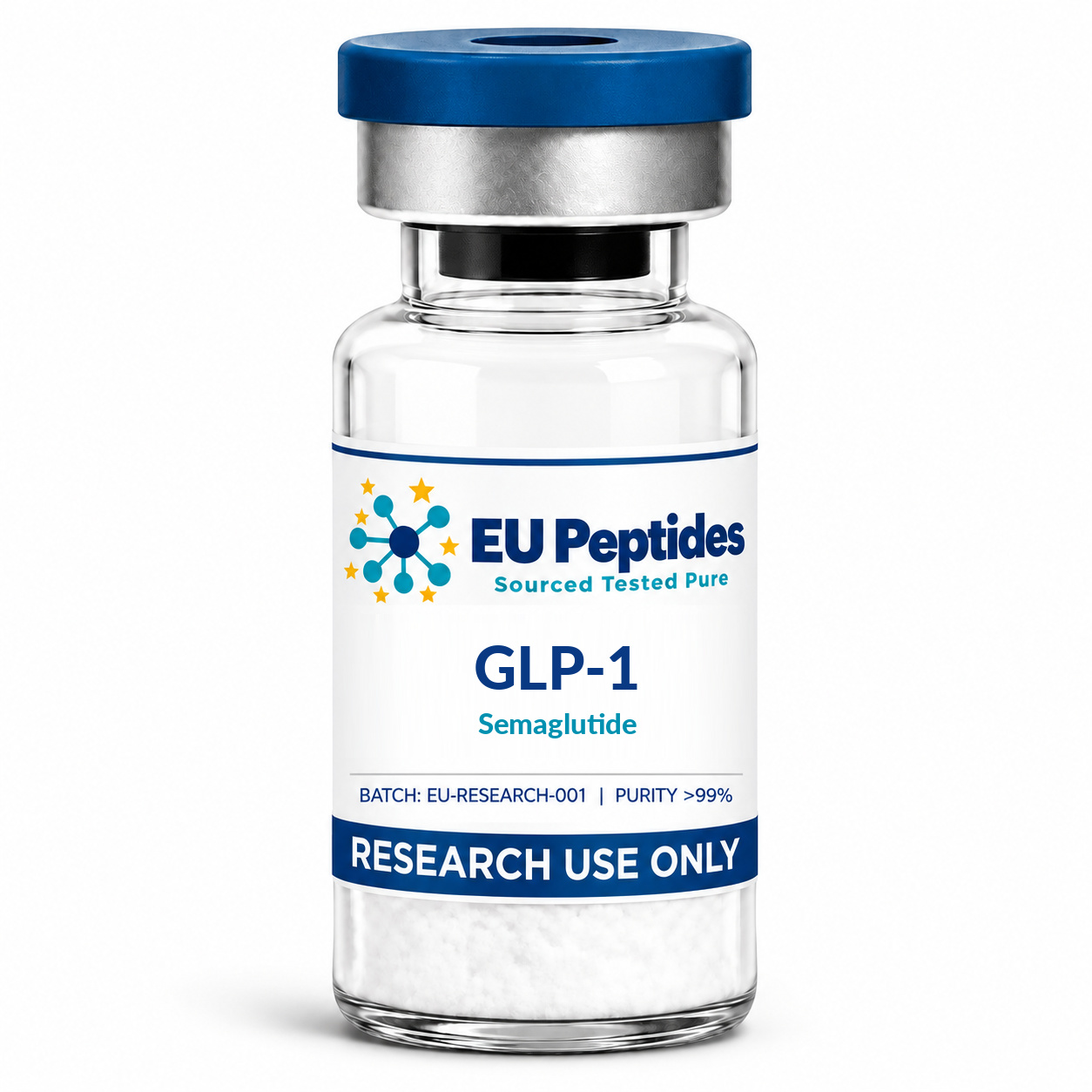
 View details
Research compound
Semaglutide
A GLP-1 analogue for laboratory metabolic-pathway research.
View compound
Research area
Semaglutide, tirzepatide and retatrutide are the three peptide products in this category. Each vial contains the named peptide as its research compound. All three are single peptides; none is a blend. They are grouped because their published research concerns hormone receptors involved in glucose metabolism, insulin signalling and energy regulation. Their inclusion here is not a claim that the supplied vial treats a condition or improves metabolism.
View details
Research compound
A GLP-1 analogue for laboratory metabolic-pathway research.
View compound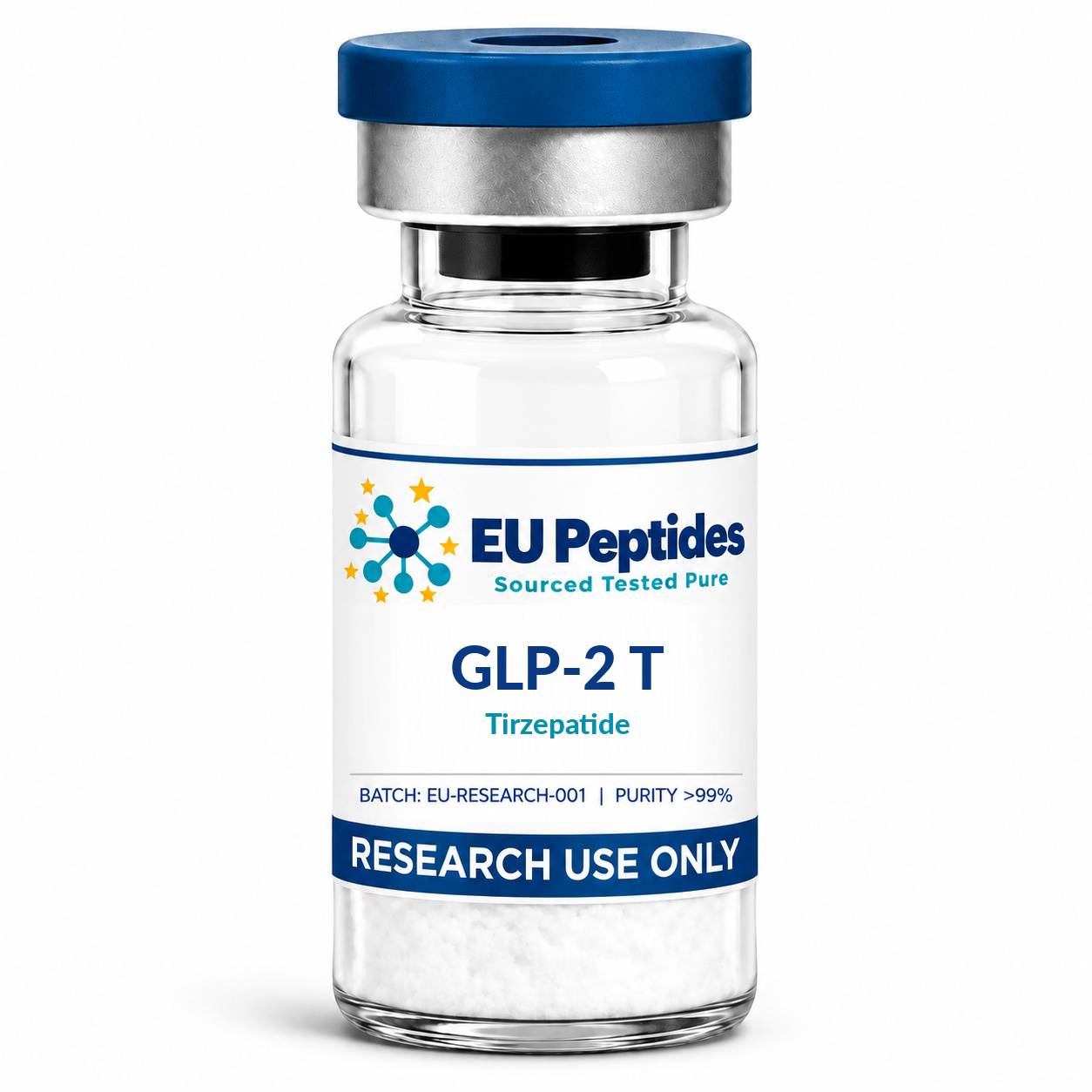 View details
Research compound
A dual GIP and GLP-1 receptor agonist for analytical research.
View compound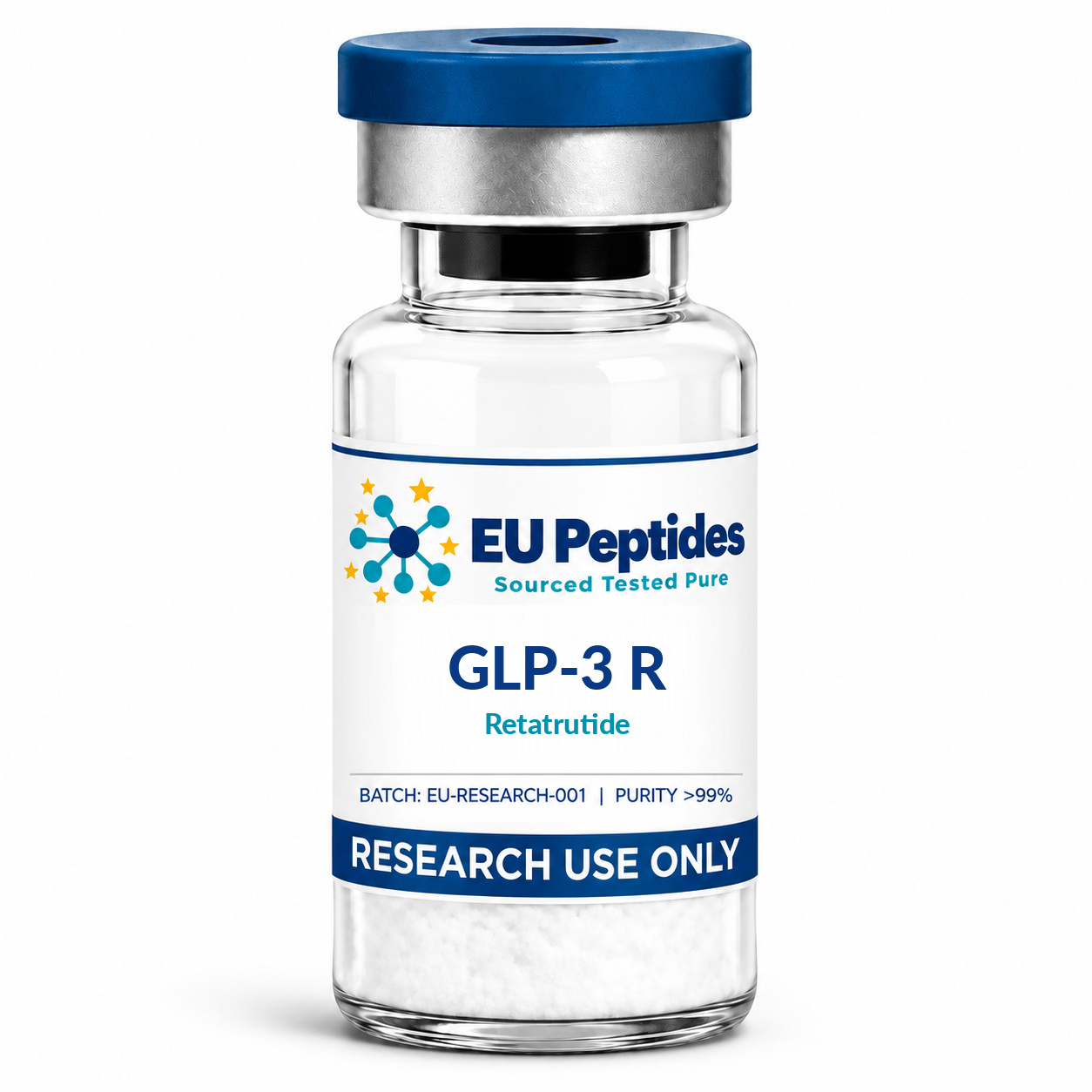 View details
Research compound
A triple agonist studied in metabolic signalling models.
View compoundThe main difference is the receptor profile. Semaglutide targets the GLP-1 receptor. Tirzepatide targets GIP and GLP-1 receptors. Retatrutide targets GIP, GLP-1 and glucagon receptors. “Dual” and “triple” describe the receptor types studied, not the number of peptides mixed into a vial.
A receptor is a protein that receives a chemical signal and helps a cell respond. An agonist is a substance that activates a receptor. In metabolic peptide research, scientists examine which receptors a compound activates, how strongly it activates them and which signals follow inside the cell.
These questions distinguish the three compounds more clearly than a shared “metabolic” label. A result at one receptor does not establish activity at another. Equally, activity at three receptor types does not mean three equal responses or make a compound universally stronger.
Semaglutide is a GLP-1 analogue: a modified peptide related to the naturally occurring hormone glucagon-like peptide-1. Its research profile centres on GLP-1 receptor activation. It provides the single-receptor comparison within this category, while tirzepatide and retatrutide have broader receptor profiles.
Tirzepatide is one peptide with activity at both GIP and GLP-1 receptors. Willard and colleagues examined its signalling in laboratory systems, including cells expressing these receptors. Their work found that tirzepatide’s activity differed between the two receptors and between the signals measured. At the GLP-1 receptor, it favoured production of cAMP, an internal cell messenger, over recruitment of a protein called beta-arrestin. This describes a measured signalling pattern, not a result for a commercial vial.
Retatrutide is a single peptide with activity at GIP, GLP-1 and glucagon receptors. Li and colleagues used cryo-electron microscopy to examine retatrutide bound to each receptor. This method produces detailed structural images, helping researchers investigate how one molecule can interact with three different receptor types. The work concerns molecular recognition and receptor activation; it does not test the EU Peptides product.
The findings described here come from laboratory receptor and cell systems, not measurements of outcomes in people. Human studies are a separate evidence category. Neither a laboratory finding nor a clinical result establishes the identity, purity or behaviour of the material in an individual research vial.
| Vial | What is in it | What the studies look at | Page |
|---|---|---|---|
| Semaglutide | Semaglutide, a single GLP-1 analogue peptide | GLP-1 receptor activation and associated metabolic signalling | Semaglutide |
| Tirzepatide | Tirzepatide, a single peptide - not a two-peptide blend | GIP and GLP-1 receptor activation, including differences in cell signalling | Tirzepatide |
| Retatrutide | Retatrutide, a single peptide - not a three-peptide blend | GIP, GLP-1 and glucagon receptor activation and molecular binding | Retatrutide |
The product name identifies the peptide; the selected vial size identifies the stated amount supplied. Neither tells you the measured purity of a particular batch. That requires the certificate associated with its lot number.
When comparing semaglutide, tirzepatide and retatrutide, keep three details separate: the compound in the vial, the receptors examined in the paper and the test result reported for the batch. A receptor description cannot replace a certificate, and a certificate cannot establish a biological outcome.
Batch certificates are not yet available. Until a matching certificate has been checked, no batch-specific purity result can be stated for these vials.
The listing rule is that a batch will be listed for sale only after its certificate has been reviewed. The lot number on the certificate must match the lot number on the vial. If the numbers do not match, that batch is not listed. A certificate for semaglutide cannot document tirzepatide, and a certificate for an earlier retatrutide lot cannot document a later one.
The acceptance requirement is at least 99% purity by HPLC. This is a listing threshold, not a measured result for an uncertified batch. Once documentation is available, the displayed figure must be the figure on that batch’s certificate.
HPLC separates components in the tested sample to assess purity under the stated method. Where the certificate includes mass spectrometry, that result is also reviewed for evidence supporting peptide identity. Neither method demonstrates receptor activity, a clinical effect or suitability for human use.
All products are supplied strictly for laboratory and analytical research. They are not for human consumption, medical use, or veterinary use.