 View details
Research compound
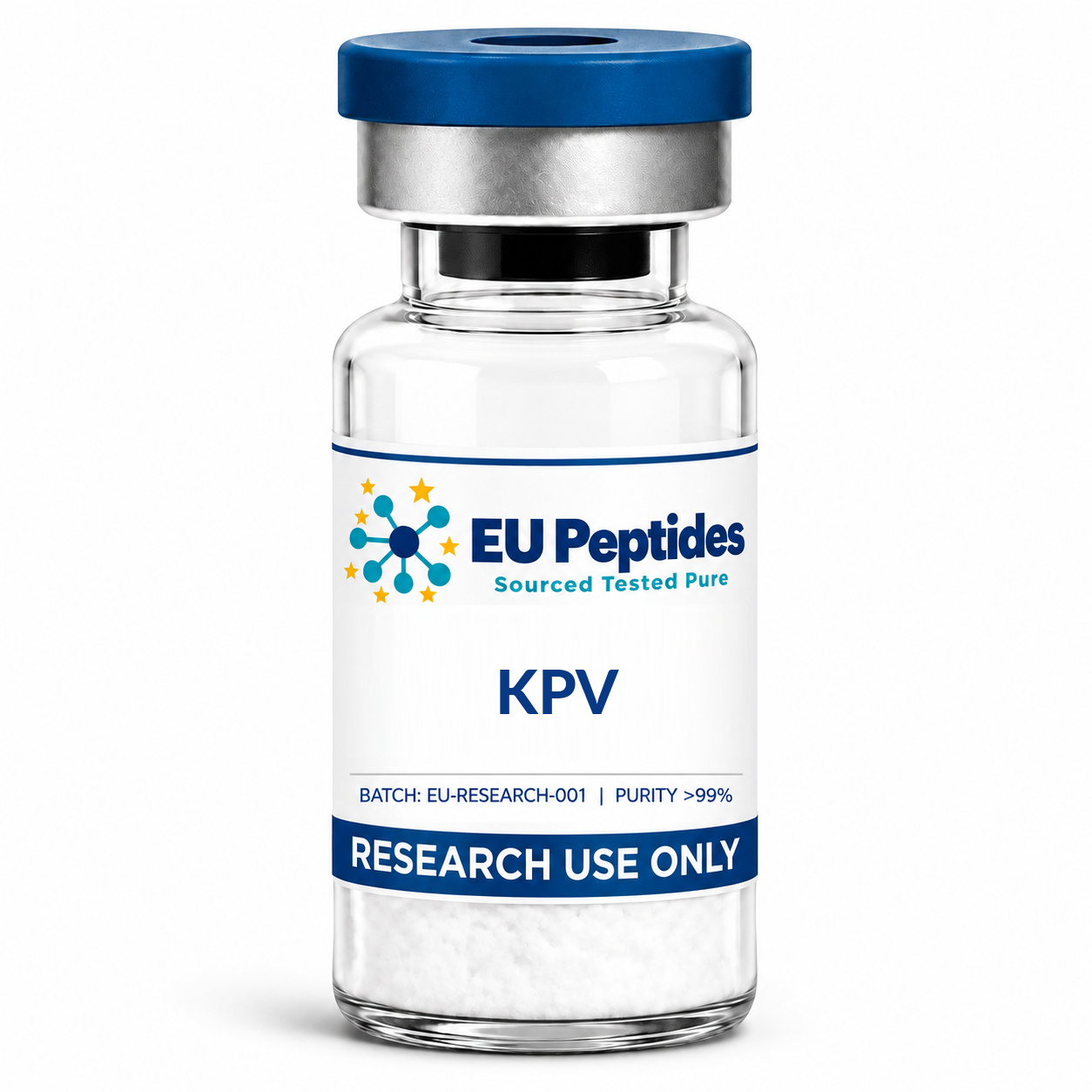
KPV
A tripeptide studied in inflammatory and mucosal research models.
View compound
Research area
This category is for research peptides used in laboratory work on inflammatory signaling, cellular communication, and tissue responses. The products are for research use. A listing here is not a claim that the material reduces inflammation, treats inflammatory bowel disease, or affects any autoimmune condition in people.
View details
Research compound
A tripeptide studied in inflammatory and mucosal research models.
View compoundImmunology is a wide network of cells, signals, and barriers. A peptide study usually takes one slice of that network: a pathway in a cell system, a transporter, or an animal model of inflammation. A change in that slice does not describe the whole response, and a result in culture or in mice does not establish the same outcome in humans. Cell work can isolate a pathway. Animal work can show interactions across tissues. Neither one carries over on its own.
Products in this category are grouped by topic, not because they are interchangeable. Match the listing to the question in the protocol. Check stated identity, sequence if listed, amount supplied, and any batch report. See what that report measured, and whether it covers the lot you are considering. Also separate the peptide alone from a formula that adds other ingredients or a delivery system. A result with a carrier or a combination cannot be assigned to the unformulated peptide.
| Vial | What is in it | What the studies look at | What the findings mean |
|---|---|---|---|
| KPV | A tripeptide of lysine, proline, and valine, corresponding to the final three amino acids of alpha-MSH. | Inflammatory signaling through NF-kB and MAPK, uptake through the PepT1 peptide transporter, and responses in intestinal epithelial cells, immune cells, and mouse models of intestinal inflammation. | Findings are specific to the cells, animals, and experimental conditions studied. They do not establish that a supplied KPV vial reduces inflammation or treats inflammatory bowel disease or autoimmune conditions in people. |
KPV is a tripeptide of lysine, proline, and valine. That sequence is the final three amino acids of alpha-melanocyte-stimulating hormone, alpha-MSH. Research interest comes from studying this short piece apart from the full hormone. Experiments have used intestinal epithelial cells, immune cells, and animal models of intestinal inflammation. Those are controlled settings. They are a reason to study the compound, not proof of a clinical benefit.
One line of that work looked at NF-kB and MAPK, pathways that take part in inflammatory signaling. In the cell systems tested, KPV reduced activation of those pathways and lowered release of certain pro-inflammatory signals. The same research also examined mouse models of colitis. Relevant to mechanism. Not evidence that a supplied KPV product reduces inflammation in people, or that the effect holds in every tissue or every inflammatory condition.
A related question is how the peptide gets into intestinal cells. The intestinal lining sits between the contents of the gut and the tissue underneath, so inflammation studies there have to account for the epithelial cells as well as the immune cells. KPV work has included PepT1, a transporter that moves certain small peptides into cells. Uptake experiments asked how that transport lined up with the responses seen in epithelial and immune-cell models. Transporter expression and cell type can change the result, which is why the methods matter more than the headline.
A separate mouse study tested KPV in two models of intestinal inflammation and reported anti-inflammatory effects inside those models. That adds to the preclinical record. It leaves human safety, effectiveness, and any clinical use unresolved.
The KPV listing has identity, quantity, formulation, and available analytical documentation. Use those to match the material in the paper, including whether the reference used KPV alone. The category only tells you this is the immunology material currently offered.
All products are supplied strictly for laboratory and analytical research. They are not for human consumption, medical use, or veterinary use.