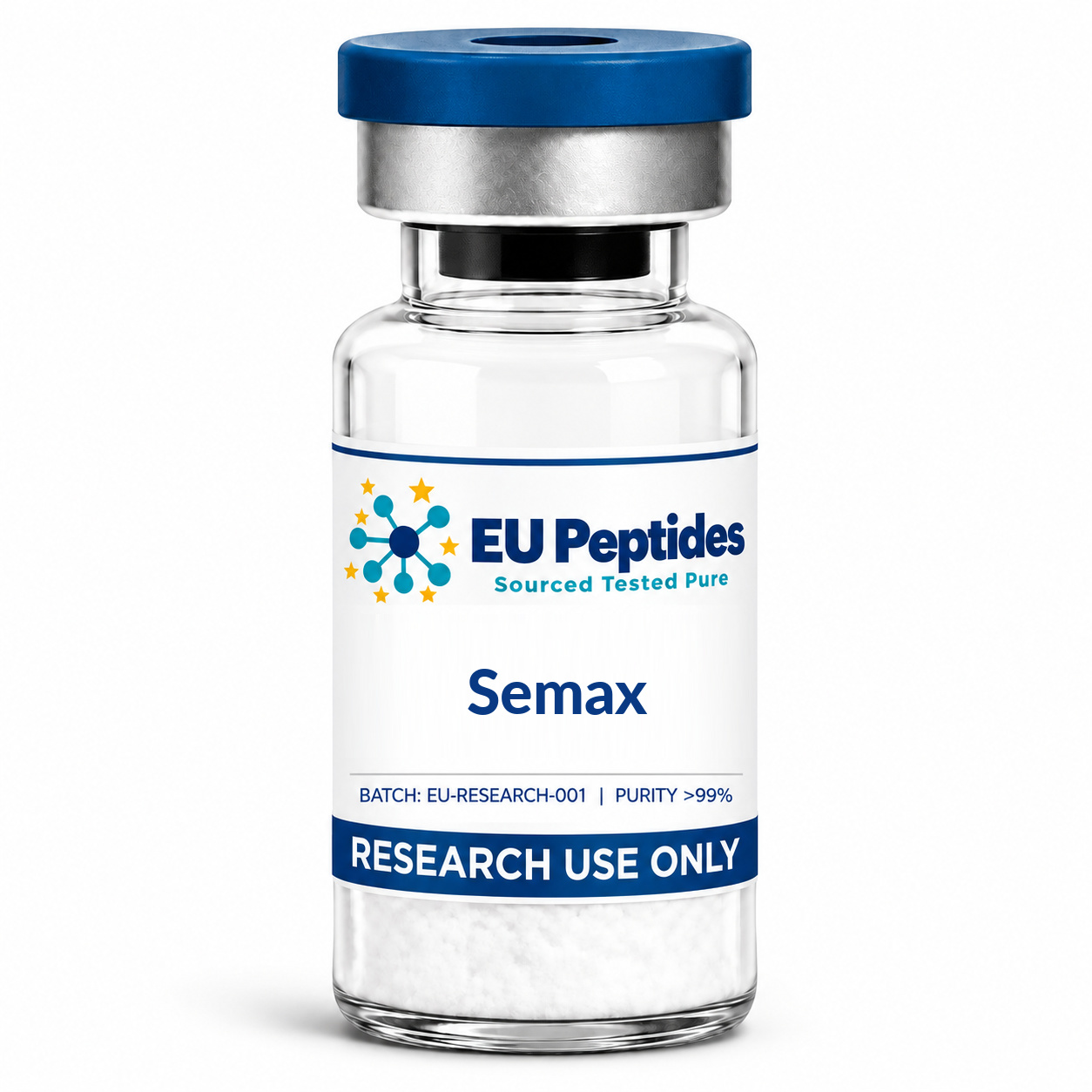
 View details
Research compound
Semax
A synthetic peptide studied in neurological and cognitive research.
View compound
Research area
This category covers research peptides that have appeared in published work on learning, memory, attention, and other nervous-system functions. All materials are supplied for laboratory use only. Inclusion on this page does not indicate that a compound improves focus, memory, stress responses, or any clinical outcome in people.
View details
Research compound
A synthetic peptide studied in neurological and cognitive research.
View compound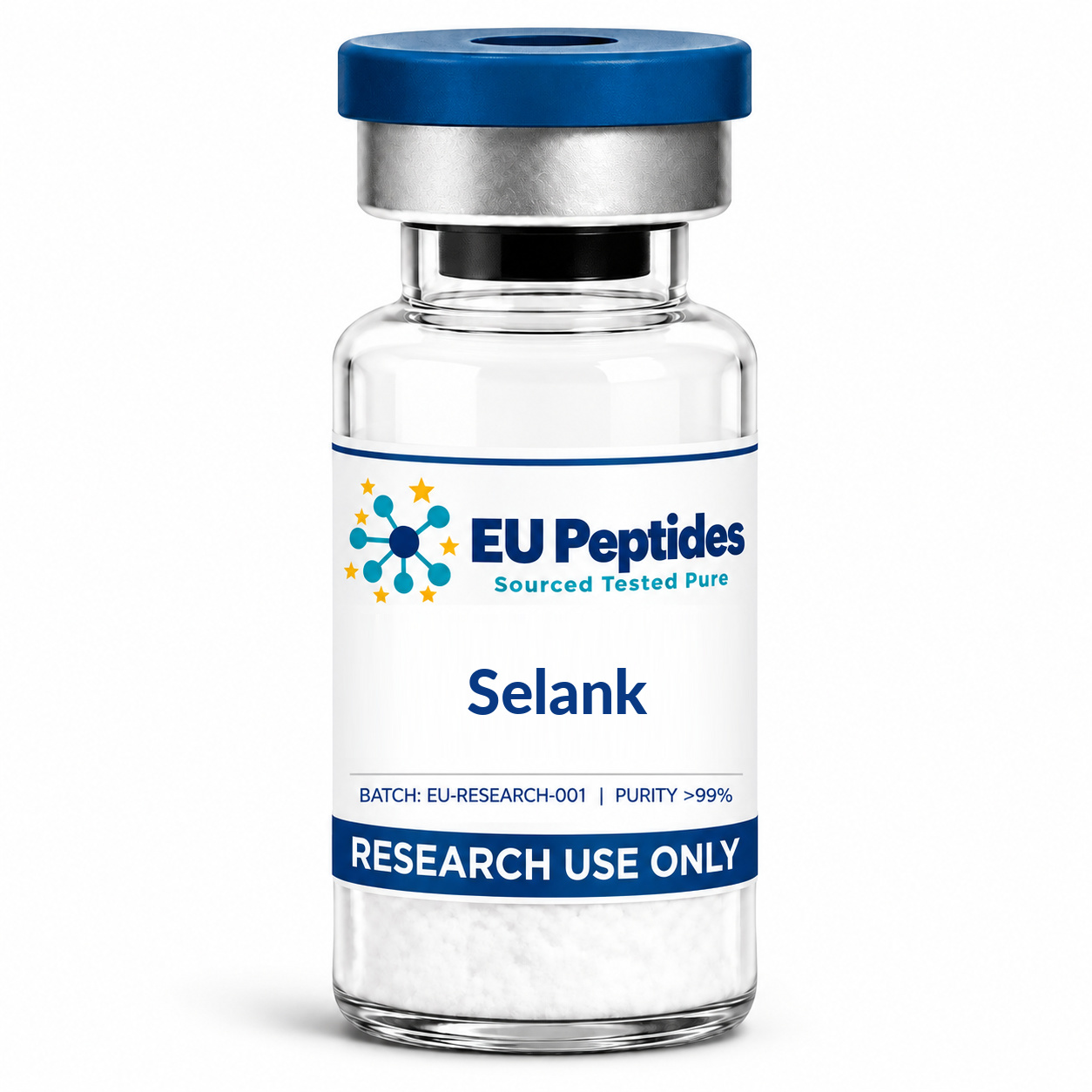 View details
Research compound
A short peptide used in laboratory models of neurological signalling and stress response.
View compoundCognitive research spans several levels. Some studies examine how nerve cells signal, others track production of specific proteins, and still others measure animal behavior in controlled learning or stress tests. A result at one of these levels does not automatically explain the others. A change in gene expression, for example, is not the same as a change in protein levels or performance on a task.
Peptides are useful here because they are short, sequence-defined chains of amino acids that can be studied in specific tissues or models. That precision is also a limitation. A well-characterized molecule may affect one marker in one region at one time point. Such a finding can be informative for the question that was asked; it is not, on its own, evidence of broader cognitive effects.
The compounds listed here have been examined in neuroscience literature involving neuronal signaling, neurotrophic factors, or stress-related responses. Shared topic area is why they appear together. It does not mean they act through the same pathways or produce comparable experimental readouts. A result reported for one peptide does not support claims about another, and studying them separately does not indicate what would happen if they were combined. If a protocol names a specific peptide, the listing must match that peptide. The category is only a way to browse.
Start with identity rather than the research summary. Confirm the stated sequence (where given), the amount supplied, and any batch analytical report. Note what the report actually measured - purity, identity, and quantity are different tests. A document confirming one does not confirm the others, and a report from a previous lot does not describe the current vial.
Formulation also matters. Solvent, salt form, and stated amount all determine whether the material corresponds to the substance described in a methods section. Missing details weaken the match to any protocol that depends on them.
The notes on this page supply context for why a compound was included. They are not a protocol and do not replace the original papers. Dose, timing, and endpoints belong to the study design.
Semax
Semax appears here because of published work on neurotrophic signaling. Neurotrophic factors are proteins involved in the development, maintenance, and function of nerve cells. One study examined Semax in the rat hippocampus and reported changes in brain-derived neurotrophic factor (BDNF) and its receptor TrkB, including increases in both protein levels and related gene expression after a single administration. Those observations give a concrete molecular reason for interest. They remain findings from an animal model in one region on specific markers, and they do not establish effects on learning or memory in people.
If the BDNF/TrkB pathway is the question of interest, the experimental details matter more than the peptide name: which tissue was sampled, when the measurements were taken, and whether the assay read gene expression or protein. The Semax listing supplies the stated identity, quantities, and available specifications so the material can be compared with the compound used in the paper.
Selank
Selank is included because of work on neurotransmission, including signaling linked to gamma-aminobutyric acid (GABA). A published experiment measured gene expression in the frontal cortex of rats after Selank administration. The genes tracked were involved in neurotransmission, and the reported changes have been used to generate hypotheses about GABAergic signaling. This is a mechanistic observation from an animal study. It does not demonstrate a calming effect, a cognitive effect, duration of any response, or a benefit outside that experiment.
Gene-expression changes are easy to over-interpret. A shift in transcript level does not establish what a network does or whether the change would be relevant in another species. The Selank provides composition, quantity, and available analytical information for judging fit to a defined research question.
| Vial | What is in it | What the studies look at | What the findings mean |
|---|---|---|---|
| Semax | Semax, a single peptide | Research in the rat hippocampus examining BDNF and its receptor TrkB - proteins involved in nerve-cell signaling and function. | Findings concern specific molecular markers in an animal model. They do not establish improved learning or memory in people. |
| Selank | Selank, a single peptide | Research in the rat frontal cortex examining changes in neurotransmission-related gene expression, including work exploring GABA-linked signaling. | Findings concern gene expression in an animal model. They do not establish calming or cognitive effects in people. |
Side by side, the distinction is the research line rather than a ranking. Semax is the listing tied to neurotrophic markers such as BDNF and TrkB. Selank is the listing tied to neurotransmission-related gene expression. That split is a starting point for the literature; it is not a complete account of either compound and is not a reason to treat them as a pair.
Select from the product page that matches the protocol - sequence, amount, and documentation first. The category only indicates which cognitive-research materials are currently offered. It does not rank them, suggest combinations, or convert an animal finding into a human result.
All products are supplied strictly for laboratory and analytical research. They are not for human consumption, medical use, or veterinary use.